Custom Packaging
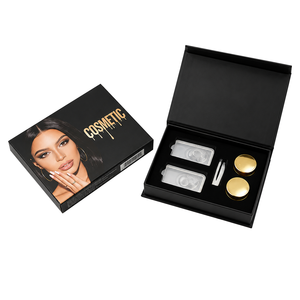
Engineered for optical boutique retail, e-commerce beauty private labels, and high-frequency turnover cosmetic supply chains.
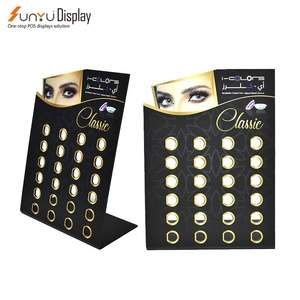
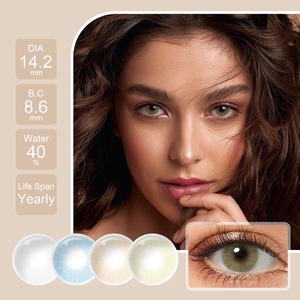
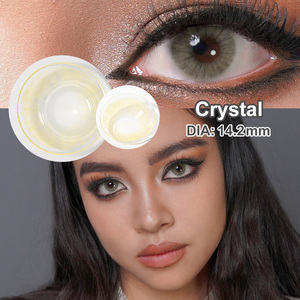
Data-driven insights for wholesale purchasers, optical franchise chains, and high-growth beauty brand founders.
Global buyer behavioral data indicates that the daily disposable color lens segment is expanding at an 8.6% CAGR. Modern urban consumers demand sterile, single-day convenience without requiring lens care solution regimens. While traditional markets favored 6-month or yearly replacement cycles for cost efficiency, tier-one cosmetic channels and optical boutiques are aggressively reallocating retail shelf space to 10-pack and 30-pack daily blister cartons.
Cosmetic lenses are transitioning from legacy HEMA monomers to high-Dk/t Silicone Hydrogel matrices. Extended daily wear times exceeding 12 hours require enhanced corneal oxygen transmissibility to eliminate hypoxia and redness. Sourcing teams must prioritize manufacturing partners capable of integrating complex micro-pigmentation layers without disrupting hydrophilic wetting agents or structural oxygen flux pathways.
Regulatory scrutiny over colored contacts as Class II/III medical devices has stiffened under the European MDR 2017/745, US FDA 21 CFR Part 820, and South Korea MFDS. Wholesale buyers are eliminating non-traceable trading intermediaries. Success hinges directly on primary factory auditability, validating ISO 13485 cleanroom certifications, bio-compatibility assays, and complete sterile barrier validation dossiers.
How proprietary cast-molding, nano-encapsulation, and ergonomic edge geometry guarantee zero ocular irritation.
Unlike lower-grade contact lenses that print color directly onto the outer surface, authentic medical-grade manufacturing utilizes a 3-layer sandwich encapsulation process. Bio-inert colorant micro-dots are permanently sealed between two pristine layers of transparent hydrogel, ensuring pigments never contact the sensitive corneal epithelium or palpebral conjunctiva.
High water content does not inherently guarantee ocular comfort; unbalanced evaporation rates induce end-of-day dryness. Advanced production balances water content (typically between 38% and 42%) with hyaluronic acid (HA) lubricating polymers inside the sterile blister saline, preventing lipid deposition and preserving the natural precorneal tear film.
Every lens blank is formed using fully automated optical casting molds. The resulting micro-tapered edge allows smooth tear fluid circulation during involuntary blinking, minimizing mechanical friction against the upper eyelid. Combined with specialized multi-tone dot matrix printing, lenses yield natural iris enlargement without artificial harshness.
Bridging industrial manufacturing scale with design agency responsiveness. No brokers, no markups, absolute transparency.
Rooted in four decades of clinical manufacturing through Gansu Constar Technology Group and Hunan Haipuming Technology (Liangguo Group). True primary factory accountability.
Fully compliant with CE (MDR 2017/745), ISO 13485:2016 quality management, and FDA Establishment Registration (FEI 3015587162) with end-to-end batch traceability.
Extensive inventory of in-stock designs across daily, monthly, and yearly cycles ready for immediate dispatch (7–10 business days) for risk-free market viability testing.
From die-cut blister foil sealing to custom rigid EVA display boxes, multi-lingual regulatory labeling, and localized registration documentation (MFDS, CE, FDA).
Direct insights covering minimum order quantities, regulatory clearance, private-label packaging, and sterile shipping.
For existing warehouse SKUs (such as our Freshgo, MILLCREEK, or KSSEYE collections), the minimum order quantity starts as low as 50 to 100 pairs with fast dispatch within 7 to 10 business days. For custom OEM printing plates and proprietary color gradients, our minimum volume is typically 1,000 to 3,000 pairs per SKU depending on whether the format is glass vial packaging or automated multi-pack blister foil sealing.
Yes. Because cosmetic contact lenses are strictly regulated as medical devices, the legal importer of record must submit complete manufacturer dossiers. As the direct factory group, Eyebeauty furnishes complete Technical Documentation packs including ISO 13485:2016 certificates, CE (MDR) declarations, biocompatibility cytotoxicity reports, autoclave sterilization validation records, and material safety data sheets (MSDS).
We deploy full sandwich encapsulation technology utilizing automated pad printing inside optical casting molds. The FDA-grade inorganic pigments are embedded within the core layer of the hydrogel lens matrix. At no point do colored pigments contact corneal tissue directly, completely preventing color migration, corneal abrasion, or allergic reactions during extended wear cycles.
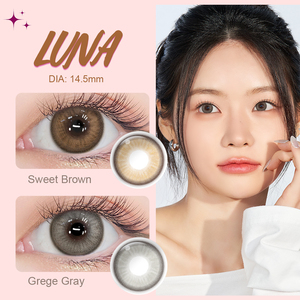
Our standard cosmetic portfolio spans plano (0.00 diopters) for purely cosmetic use up to -10.00 diopters in precise 0.25D/0.50D increments. Standard base curves (BC) are precisely tuned between 8.5mm and 8.6mm with diameters (DIA) from 14.0mm (subtle natural blend) up to 14.5mm (dramatic enlarging effect), ensuring optimal fit characteristics across diverse global demographic populations.