Flagship Color & Cosmetic Contact Lenses Ready for Volume Procurement
Explore our precision-engineered soft cosmetic lenses manufactured with patented pigment-encapsulation safety technology, balanced 40% water content, and ergonomic 14.0mm–14.2mm optical zones.
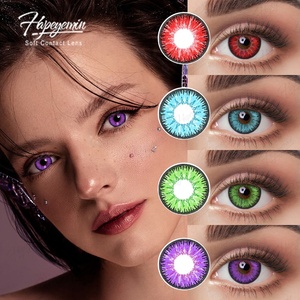
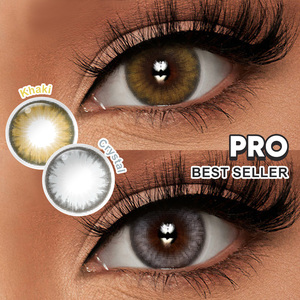
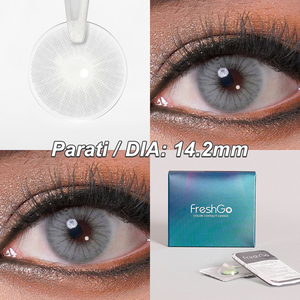
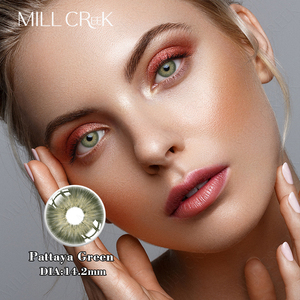
Four Decades of Medical Contact Lens Precision Manufacturing
Sourcing contact lenses requires strict regulatory compliance, ocular biocompatibility, and batch consistency. As China's pioneer contact lens manufacturing coalition, our family group dates back to 1984 with the foundation of Gansu Constar Technology Group. For over 42 years, we have transitioned through every technological evolution—from manual lathe cutting to state-of-the-art automated robotic cast molding.
Today, our modern soft color contact lens manufacturing hub is driven by Hunan Haipuming Technology (Liangguo Group), supported by the global marketing and regulatory service headquarters at Eyebeauty Technology Co., Ltd. We are not third-party brokers or trading intermediaries; we own our Class 100,000 cleanroom facilities, cast-molding lines, steam autoclave sterilization units, and bio-laboratories.
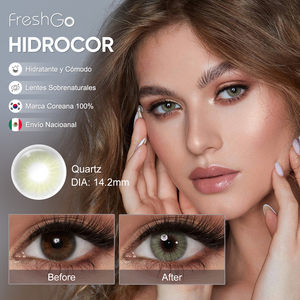
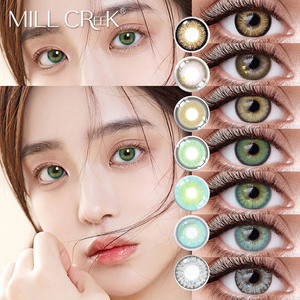
Our proprietary brands—including MILLCREEK, KSSEYE, Haipurecon, and DUOXIU—alongside international favorites like Freshgo, are sold across 126 countries, proving market acceptability and consumer retention across Europe, North America, Southeast Asia, the Middle East, and South Korea.
Gansu Constar Technology Group
Founded in 1984. Specialist in vision science, optical substrate engineering, and high-purity medical polymer synthesis.
EST. 1984 · 42+ YearsHunan Haipuming Technology
Core Liangguo Group production facility. High-speed multi-cavity cast molding, color sandwich printing, and blister packaging.
Liangguo Group · Cleanroom BaseGlobal Regulatory Clearances
Full CE under European Medical Device Regulation (EU MDR 2017/745), ISO 13485:2016 quality systems, and US FDA registration (FEI: 3015587162).
CE MDR · ISO 13485 · US FDAEyebeauty Global Services
Turnkey brand incubation, customized blister foil artwork, MFDS Korean registration dossiers, and global rapid dropshipping/cargo logistics.
OEM / ODM / Private LabelState-of-the-Art Contact Lens Manufacturing Technologies
Modern cosmetic and corrective contact lenses have evolved from simple aesthetic novelties into Class II/IIa high-precision ophthalmic medical devices. Here is how modern Chinese manufacturing achieves superior ocular comfort and safety.
Tri-Layer Pigment Sandwich Encapsulation
The greatest risk in low-grade color contacts is pigment migration or direct epithelial contact. Our factories utilize high-precision micro-encapsulation sandwich technology. Non-toxic, FDA-approved bio-reactive cosmetic colorants (iron oxides, titanium dioxides, phthalocyanine) are printed directly onto an intermediate hydrogel matrix and hermetically sealed beneath an anterior clear hydrogel cover layer. The cornea and palpebral conjunctiva touch only pure, biocompatible p-HEMA, eliminating friction, foreign body sensations, and dye cytotoxicity risks.
Fully Automated Cast Molding Systems
Unlike spin-casting, which results in irregular edge thickness, or lathe-cutting, which introduces microscopic tool marks, our facilities rely on automated multi-cavity cast-molding systems. Virgin optical-grade polymer resins are injected into mirror-polished quartz steel molds under laminar airflow cleanrooms. This yields an exceptionally smooth round-edge profile (0.08mm center thickness) with high repeatability, ensuring continuous tear meniscus circulation, reduced conjunctival staining, and uniform dioptric graduation from plano to -8.00D.
Silicone Hydrogel & Biomimetic Polymers
Addressing the global shift toward extended wear comfort, our R&D team engineers advanced fluorosilicone macromers blended with hydrophilically modified HEMA and NVP. This chemical framework balances high oxygen transmissibility (Dk/t exceeding 80–120) with low modulus (0.4–0.5 MPa) to prevent giant papillary conjunctivitis (GPC). Biomimetic surface treatments utilizing phosphorylcholine (PC) technology replicate natural corneal epithelial cell membranes, resisting protein and lipid deposition over multi-hour wear cycles.
| Evaluation Parameter | Legacy Color Lenses (Generic Market) | Eyebeauty / Haipuming Advanced Hydrogel | Next-Gen Silicone Hydrogel (SiHy) |
|---|---|---|---|
| Colorant Application | Surface printing (High risk of corneal dye friction) | Sandwich Embedment Sealed p-HEMA layer | Internal Micro-Capsule Nanoparticle bond |
| Oxygen Transmissibility (Dk/t) | 10 – 16 Dk/t (Causes hypoxic limbal redness) | 24 – 32 Dk/t Suitable for full-day daily wear | 85 – 125 Dk/t Exceptional corneal respiration |
| Water Content / Equilibrium | 38% (Prone to ocular dehydration) | 40% – 42% Balanced tear stability | 48% – 55% High moisture retention with PC |
| Manufacturing Process | Semi-lathed / Manual Spin Casting | Full Robotic Closed-Loop Cast Molding | Automated Vacuum Photo-Polymerization Cast |
| Regulatory Standards | Regional / Non-notified certificates | CE (EU MDR 2017/745 Class IIa), ISO 13485 | CE (MDR), US FDA 510(k), Korea MFDS ready |
Emerging Global Sourcing Trends in Contact Lens Wholesale
How successful optical chains, beauty distributors, and direct-to-consumer (D2C) brands are adapting their supply chains for maximum margins, regulatory insulation, and customer lifetime value.
Surge in Daily Disposable (1-Day) Color Segments
While yearly and monthly replacement modalities remain popular in cost-conscious territories, mature markets (South Korea, Japan, Western Europe, North America) exhibit a 24.8% annual compound migration toward daily disposables. Modern consumers prioritize sterile convenience, eliminating lens case biofilm hazards and multipurpose solution toxicities. Wholesale buyers are adjusting procurement portfolios by stocking blister-packed 10-piece and 30-piece daily cosmetic formats.
Natural Iris Micro-Dot Aesthetic Mimicry
The era of exaggerated 14.8mm "doll-eye" lenses has shifted toward ultra-realistic cosmetic micro-patterns. The highest sell-through SKUs across e-commerce and retail display graphic diameters (G.DIA) between 12.8mm and 13.4mm. Brands require 3-tone and 4-tone subtle gradient limbal transitions—specifically ash browns, smoky olives, and translucent hazel tints that blend seamlessly over dark Asian and Caucasian brown irises without looking artificial.
Convergence of Cosmetic and Corrective Powers
Cosmetic lenses are no longer exclusively plano (0.00 diopter). Global market data indicates over 62% of color lens buyers require refractive correction for myopia (-0.50D to -8.00D), with an accelerating demand for astigmatic toric color lenses. Successful B2B importers partner with manufacturers offering dynamic power matrix inventories, allowing mixed-power carton fulfillment without inflated production lead times.
Stricter Global Medical Device Compliance
The full enforcement of the European Medical Device Regulation (EU MDR 2017/745) and rigorous audit requirements by South Korea's Ministry of Food and Drug Safety (MFDS) and US FDA have eliminated thousands of uncertified trading brokers. Enterprise wholesalers now demand direct factory audit access, ISO 13485:2016 unannounced inspection records, cytotoxic safety dossiers, and batch-level traceability before issuing purchase orders.
Agile Private Labeling & Micro-Batch Incubation
High-growth beauty influencers and digital native brands can no longer commit to 50,000-unit per SKU production runs. Leading Chinese manufacturing partners bridge this barrier by offering agile OEM services: low initial MOQs (starting at 100 to 500 pairs per color for in-stock formulations), turnkey multi-lingual packaging design, rapid mockups, and complete private label blister sealing under one roof.
Blue-Light & High-Frequency UV Defense Integration
With screen time increasing globally, contact lenses are taking on active ocular protection roles. Next-generation wholesale procurements specify lenses integrated with Class 1 and Class 2 UV blockers (blocking >90% UVA and >99% UVB radiation) as well as selective 420nm high-energy visible (HEV) blue-light absorbing monomers directly incorporated into the lens matrix without compromising color clarity.
Why Global Wholesalers Partner Directly With Our Factories
Eliminating middlemen allows your brand to capture higher operating margins while securing uncompromising manufacturing safety, technical transparency, and localized compliance support.
Tier-1 Factory Direct Wholesale Pricing
By engaging directly with Hunan Haipuming Technology and Gansu Constar Technology Group, you eliminate agent commissions, export broker markups, and overseas trading handling costs. Our high-efficiency automated cleanrooms provide scale advantages, ensuring factory-direct pricing as low as competitive volume rates, giving your retail and wholesale channels unbeatable price-performance ratios.
Extensive Catalog: 15,000+ Ready Formulations
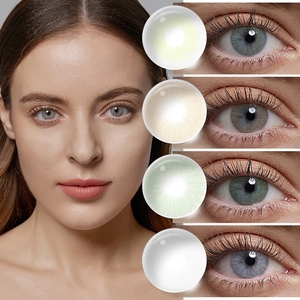
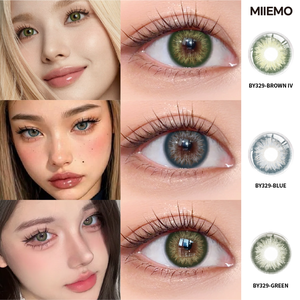
Developing unique cosmetic contact lens patterns is technically complex and capital intensive. Eyebeauty gives you access to a library of over 15,000 proven iris patterns, encompassing natural daily series, multi-tone hazel blends, high-impact cosplay fantasy designs, and luminous glow highlights. We launch over 100+ trend-forward SKUs each quarter aligned with global runway and beauty forecasts.
Dedicated Regulatory & Dossier Preparation
Navigating ophthalmic medical device imports can delay product rollouts by months. Our dedicated in-house regulatory affairs team works alongside your compliance officers to supply complete technical dossiers: biocompatibility testing reports (ISO 10993 cytotoxicity, ocular irritation, systemic toxicity), accelerated shelf-life stability data (up to 5 years), blister seal integrity certifications, and local labeling templates.
Frequently Asked Questions: Sourcing Contact Lenses From China
Detailed technical and commercial answers addressing regulatory compliance, private labeling, sterilisation parameters, quality control, and international logistics.
What international medical device certifications do your factories possess?
Our manufacturing bases operate under stringent medical device quality management systems certified to ISO 13485:2016. We hold European CE certification under the rigorous Medical Device Regulation (EU MDR 2017/745) Class IIa, registered facility status with the US FDA (FEI: 3015587162), and China NMPA medical device manufacturing licenses. We routinely provide full technical files and audit reports to support overseas registrations including South Korea's MFDS.
What is the standard Minimum Order Quantity (MOQ) for OEM/ODM private labels?
For factory in-stock designs and standard sterile blister packaging (under our group brands like Haipurecon, Freshgo, KSSEYE, or MILLCREEK), the wholesale MOQ starts as low as 100 pairs with immediate dispatch. For bespoke OEM private labeling—including custom outer paper boxes, customized blister aluminum foil printing, and proprietary iris colorant matching—our MOQ generally starts at 500 to 1,000 pairs per SKU, facilitating manageable inventory entry for emerging brands.
How do you guarantee color safety and ensure pigments do not leach into the eye?
We employ an advanced multi-layer cast-molding sandwich embedment technique. Cosmetic pigments are enclosed within microscopic hydrogel layers rather than printed onto the external lens surfaces. Every production batch undergoes rigorous ISO 10993 cytotoxicity testing, simulated physiological wear friction tests, and spectrophotometric extraction testing to confirm zero colorant leaching and uncompromised corneal biocompatibility.
Can you provide custom packaging in local languages (English, Korean, Spanish)?
Yes. Turnkey private label packaging is one of our key strengths. We offer full graphic design support for sterile PP blister trays, medical-grade foil lids, glass vials, and outer folding cartons. All artwork can be localized to feature regulatory barcodes (EAN/UPC), QR batch codes, GTIN identification, and mandatory local language consumer warnings complying with FDA, EU MDR, or Korean MFDS retail packaging laws.
What is the shelf life and sterilization methodology for your wholesale contact lenses?
All lenses are packaged in buffered isotonic saline solution and subjected to high-temperature saturated steam autoclave sterilization at 121°C for a validated duration (EN 556-1 sterility assurance level SAL 10⁻⁶). This yields a validated shelf life of 3 to 5 years from the date of manufacture. Every batch is stamped with lot numbers, manufacturing dates, and expiration dates integrated with our digital batch tracking system.
What shipping methods, terms, and lead times do you offer for international cargo?
We support multiple Incoterms including EXW, FOB (Shanghai, Shenzhen, Guangzhou, Hong Kong), CIF, and door-to-door DDP (Delivered Duty Paid) with customs clearance included for key regions. Standard in-stock orders are typically dispatched via express air courier (DHL, FedEx, UPS) within 7–10 days. Custom OEM production cycles range from 25 to 35 business days depending on mold preparation and blister printing runs.
Partner Directly With China's Leading Medical Contact Lens Factory
Whether you require fast-moving ready inventory from our proprietary lines (Freshgo, Haipurecon, KSSEYE, MILLCREEK) or are engineering a bespoke private-label color contact lens brand, our engineers and regulatory specialists are here to accelerate your growth.