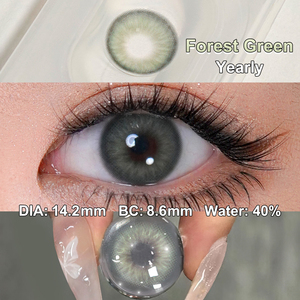
Direct From Automated Cleanrooms
High-Velocity Product Formulations for Private Label Scale
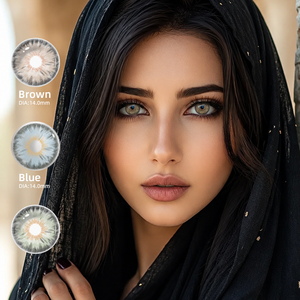
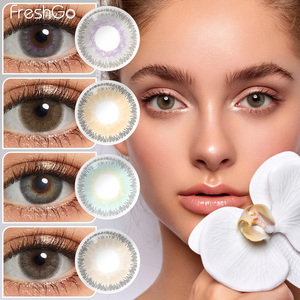
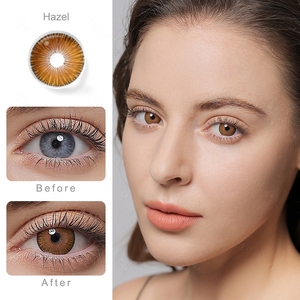
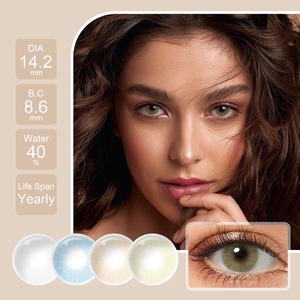
Explore eight core clinical-grade soft cosmetic and spherical lenses engineered with sandwich encapsulation chemistry, high biocompatibility hydrogel matrix, and comprehensive diopter customization.
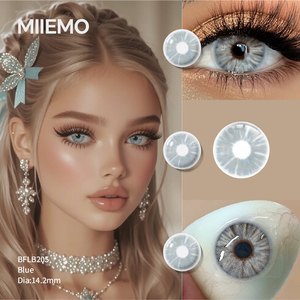
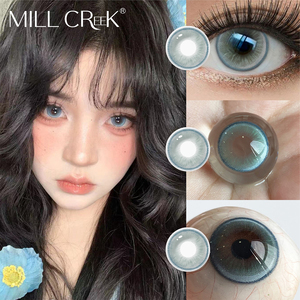
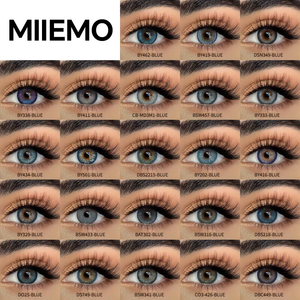
Direct-From-Source Heritage
Why Tier-1 Vision Care Brands Partner with Eyebeauty
Eyebeauty Technology Co., Ltd. operates as the specialized international contract manufacturing flagship for a multi-decade family industrial enterprise. We provide direct factory-floor accountability without middlemen markups or third-party sourcing ambiguity.
Fully Integrated Cleanroom Assets
Founded on an industrial pedigree established in 1984 through Gansu Constar Technology Group and augmented by the advanced automated color lines of Hunan Liangguo Group (Haipuming Technology), our infrastructure features Class 100,000 and Class 10,000 cleanrooms dedicated entirely to ophthalmological device manufacturing.
Stringent Multi-Region Compliance
We de-risk regulatory entry for global buyers. Our sites maintain active compliance under CE (MDR 2017/745), ISO 13485:2016 quality management, and an operational FDA-registered facility (FEI 3015587162). In-house validation dossiers fully support MFDS (South Korea), PMDA (Japan), and US 510(k) importer filings.
15,000+ Design Patent Repository
Our K-Beauty Trend Design Studio engineers over 100 fresh, market-validated graphics each quarter. Utilizing micro-encapsulation sandwich printing, pigments remain hermetically isolated between clear hydrogel polymers, safeguarding corneal tissue against direct pigment leaching or abrasive wear.
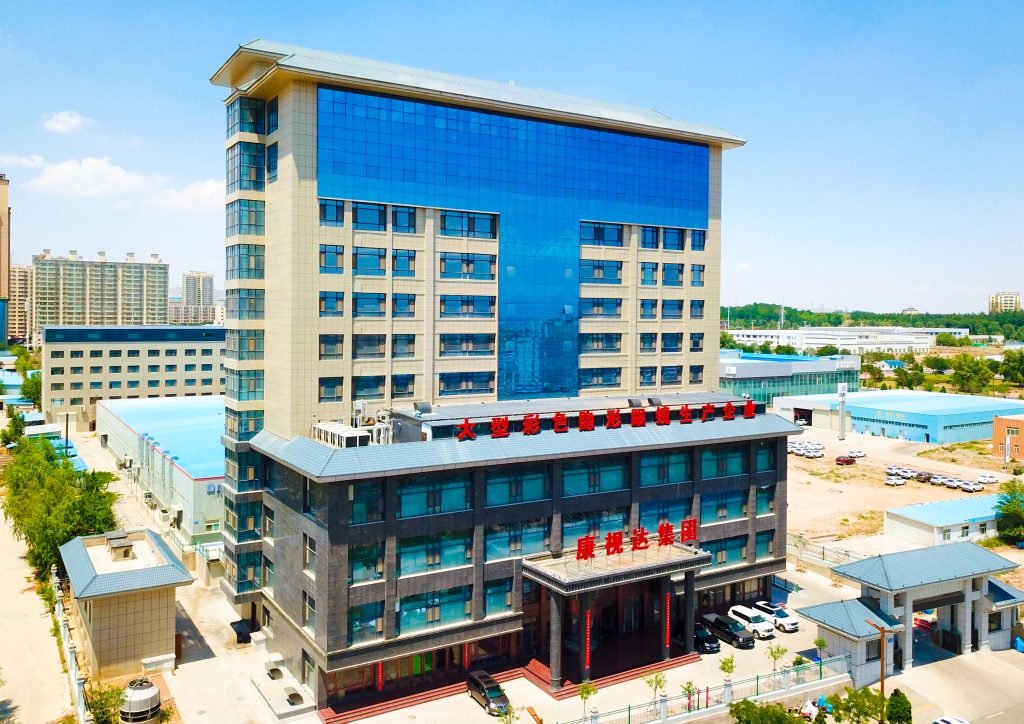 EST. 1984 · GANSU BASE
Gansu Constar Technology Group
Our cornerstone facility dedicated to primary vision care, high-volume cast molding, automated optical parameter inspection, and continuous-run spherical soft lens polymerization.
CE (MDR) Certified
ISO 13485
Class 10,000 Cleanroom
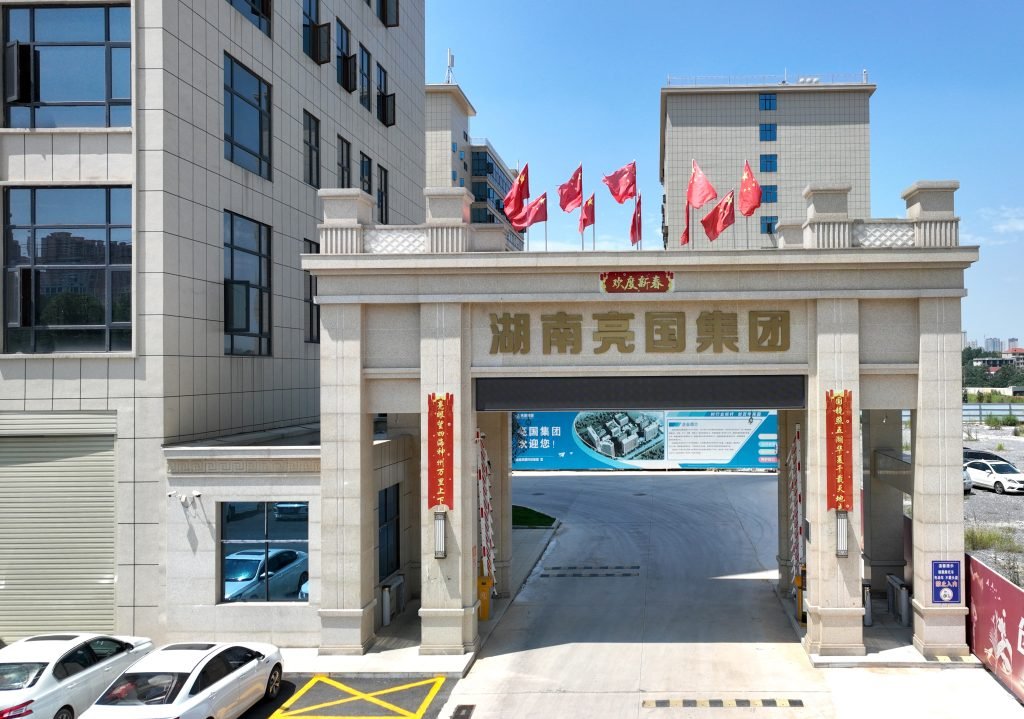 LIANGGUO GROUP · HUNAN BASE
Hunan Haipuming Technology Co., Ltd.
Specialized color contact lens manufacturing hub deploying pad-printing robotics, automated vision alignment, blistering seal automation, and gamma/steam terminal sterilization chambers.
FDA FEI: 3015587162
Micro-Sandwich Pigment Tech
Automated Blistering
Global Procurement Intelligence
Future Sourcing Trends: The 2026–2030 Contact Lens Market
Procurement directors in Europe, North America, and East Asia are adjusting their supply chain configurations to balance regulatory enforcement, biocompatible material shifts, and agile omnichannel consumer demand.
1. Shift toward Daily Disposable Hydrogels
While monthly and 6-month replacement cycles remain the bedrock in developing regions and cosmetic beauty niches due to value economics, brand procurement portfolios are aggressively expanding into Daily Disposables (1-Day Wear). Retail consumers demand convenience and reduced microbial keratitis risks, driving factories to automate strip blistering packaging lines to lower unit-pack pricing.
2. High-Dk Silicone Hydrogel (SiHy) Infiltration
The cosmetic market is shifting beyond legacy 2-HEMA polymers toward second- and third-generation Silicone Hydrogel composites. Maintaining high oxygen transmissibility (Dk/t > 80) while achieving stable tint pigmentation and low surface modulus is the primary technical frontier for premium private labels targeting frequent wearers.
3. Zero-Tolerance On Regulatory Dossiers
Customs authorities worldwide—exemplified by South Korea's MFDS, the EU's MDR notified bodies, and the US FDA—are scrutinizing chemical leachables, extractables, cytotoxicity, and shelf-life stability data. Importers can no longer source from uncertified workshops; supply chains are concentrating into audit-hardened OEM facilities.
Procurement Strategy Recommendation: Buffer Inventory vs. Agile OEM
Leading optical brand owners are adopting a hybrid procurement framework. By utilizing our Ready-to-Ship Inventory Reserve (1,500+ active SKUs), distributors test micro-trends across social media and boutique optical chains with 7–10 day transit cycles. Once a graphic, tone gradient (such as Hazel Ash or Olive Highlight), or base-curve configuration captures measurable market share, volume orders transition to fully customized high-volume automated runs (10,000+ units per power) achieving optimal unit cost efficiency.
Furthermore, sustainable procurement standards are driving the phase-out of plastic vials in favor of ultra-thin, low-polypropylene blister packaging with recyclable foil lids, reducing cross-border air-freight volume by over 34%.
Manufacturing White Paper
Technical Evolution in Contact Lens Manufacturing
Understanding how molding precision, dye entrapment, and wettability chemistry dictate consumer clinical safety and brand longevity.
Cast Molding vs. Lathe Cutting
Traditional lathe cutting cannot reliably scale colored pattern repeatability. Our factories deploy Full Cast Molding utilizing high-precision optical steel toolings, guaranteeing identical base curve (8.5mm / 8.6mm) and edge taper consistency across millions of units.
Micro-Sandwich Color Isolation
To prevent ophthalmic complications, color pigments must never touch human ocular tissue. Our automated pad printers sandwich FDA-listed inorganic pigments within two micro-thin hydrogel layers, resulting in 100% smooth corneal and palpebral interfaces.
Plasma Surface Functionalization
Hydrophobic spots on lens surfaces attract tear lipids and protein deposits, inducing end-of-day dryness. We integrate internal wetting agents (PVP/hyaluronic acid matrices) and optional plasma surface modification to maintain a persistent water gradient.
Automated AOI Visual Inspection
Every single manufactured lens undergoes sub-micron Automated Optical Inspection (AOI). High-resolution CCD cameras scan each lens in hydrated state for edge burrs, pigment voids, bubbles, or diopter curvature anomalies prior to thermal sealing.
B2B Buyer Knowledge Base
Frequently Asked Questions: Global Contact Lens OEM Sourcing
Essential guidance on minimum order quantities, custom branding execution, quality management validations, and international customs clearance.
What are the typical Minimum Order Quantities (MOQ) for custom private label contact lenses? +
For existing, factory-validated color matrices with our group brand packaging or wholesale bulk packs, MOQs start as low as 50 to 100 pairs for market trial sampling. For fully customized private label brand programs (custom outer color boxes, branded aluminum foil blister lids, custom user manuals in Korean, English, Spanish, or Arabic), the baseline starts at 500 to 1,000 pairs per SKU/color, distributed across multiple sphere powers (Plano 0.00 up to -8.00D). Fully customized graphic dot-matrix designs require an upfront steel mold engineering fee, typically waived when volume commits exceed 50,000 units annually.
How does Eyebeauty assist brand importers with medical device registrations (MFDS, CE MDR, US FDA)? +
Contact lenses are classified as Class IIa/IIb or Class III medical devices across key jurisdictions. While the importing entity in South Korea, the European Union, or North America holds the ultimate market authorization license, Eyebeauty prepares the comprehensive manufacturer Technical Construction File (TCF). This includes ISO 13485:2016 audit certificates, ISO 10993 biological evaluation data (cytotoxicity, ocular irritation, systemic toxicity), steam sterilization validation reports (EN 556-1), shelf-life accelerated stability test logs, and lot release batch records.
What is the lead time from design approval to factory shipping? +
For stock designs chosen from our 1,500+ ready inventory lines, dispatch takes place within 7 to 10 working days via express air cargo (DHL, FedEx, UPS) or freight forwarder. For newly commissioned OEM private label productions requiring secondary packaging printing and sterilizer scheduling, standard lead times are approximately 25 to 35 business days following final digital artwork sign-off and blister foil plate proofing.
Can you produce toric (astigmatism) and multifocal cosmetic colored contact lenses? +
Yes. Our R&D engineering center specializes in dynamic stabilization and prism-ballast cast molds for cosmetic toric colored contact lenses, correcting cylinder powers from -0.75 up to -2.75 at custom axes. Multifocal concentric designs are also supported for optical clients looking to combine presbyopia vision correction with natural aesthetic eye-brightening iris patterns.
What quality assurance measures safeguard against pigment migration? +
We employ double-sided cast molding micro-encapsulation technology. The pigment print is applied to a partially polymerized base curve gel layer, then sealed by a protective anterior monomer coat before final ultraviolet and thermal polymerization. Each batch undergoes rigorous friction rub testing with solvent immersion and slit-lamp cross-sectional microscopy to verify zero pigment exposure on both the anterior and posterior lens surfaces.