Featured Cosmetic & Ophthalmic Products for Export
Engineered across certified Class 100,000 cleanrooms under strict CE (MDR) and ISO 13485 protocols. Our complete range offers full private label OEM/ODM customisation for global brands.
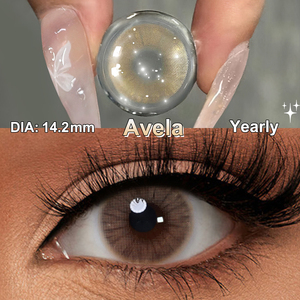
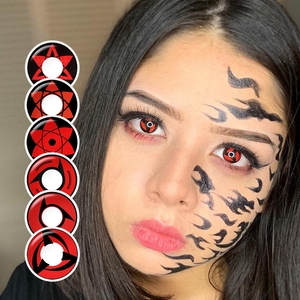
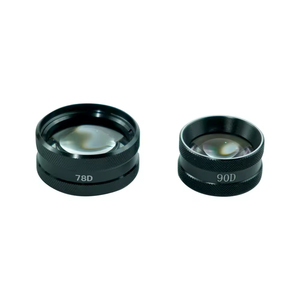
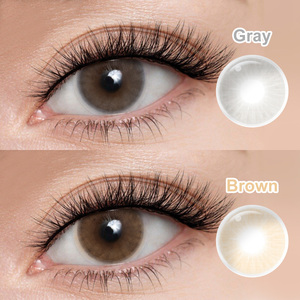
Navigating the Chinese Cosmetic Contact Lens Manufacturing Sector
The global cosmetic contact lens market has witnessed a transformative paradigm shift over the past decade. Previously dominated by legacy optical conglomerates in North America and Western Europe, the locus of cutting-edge hydrogel and silicone-hydrogel innovation has migrated toward specialized, vertically integrated Chinese production facilities. Chinese manufacturing hubs now unite medical-grade polymer synthesis, automated multi-cavity cast molding, micro-encapsulation pigment sandwich printing, and high-throughput automated optical inspection (AOI) under one unified regulatory infrastructure.
For international optical brands, retail cosmetic chains, and medical device importers, identifying a qualified cosmetic contact lens supplier China factory & exporter involves navigating beyond surface-level trade listings. Cosmetic contact lenses are not mere aesthetic accessories; they are Class II (or Class III depending on target jurisdiction) medical devices that sit directly on the human cornea. Sourcing managers must evaluate manufacturing partners through the rigorous lens of physiological safety, polymer oxygen permeability (Dk/t), surface wetting kinetics, dimensional reproducibility, and end-to-end regulatory compliance.
This comprehensive technical whitepaper provides B2B buyers with an authoritative assessment of China's top contact lens manufacturing tiers, auditing criteria, procurement trends for 2026–2030, and the multi-decade industrial ecosystem championed by Eyebeauty Technology Co., Ltd. and its foundational manufacturing groups: Gansu Constar Technology Group and Hunan Liangguo Group (Hunan Haipuming Technology).
The Top 10 Evaluation Criteria for Sourcing Chinese Contact Lens Manufacturers
When enterprise optical buyers compile their shortlists for the top 10 contact lens exporters from China, the assessment matrix must prioritize verifiable engineering capabilities, material science mastery, cleanroom standards, and compliance track records over basic per-unit pricing. Below are the ten non-negotiable auditing pillars:
1. ISO 13485 & CE MDR
Total quality management adherence verified through accredited notified bodies under Regulation (EU) 2017/745 (MDR) and comprehensive ISO 13485:2016 certification.
2. US FDA FEI Registration
Active facility registration with the United States FDA (such as FEI 3015587162) and validated 510(k) master file readiness for North American market entry.
3. Sandwich Cast-Molding
Patented dual-layer polymer encapsulation keeping biocompatible pigments trapped entirely between hydrogel layers to eliminate corneal contact friction.
4. Optical AOI 100% Inspection
Sub-micron automated optical inspection verifying refractive power, edge profile smoothness, diameter (DIA), base curve (BC), and aberration margins.
5. Class 100,000 Cleanrooms
Positive-pressure environment controls with micro-particulate HEPA air scrubbing, purified water systems (WFI standard), and strict microbiological bioburden control.
6. Oxygen Permeability (Dk/t)
Optimized polymer formulations balances high water content (38%-58% HEMA) with advanced silicone hydrogel polymers exceeding 80+ Dk/t units.
7. Regulatory Dossier Support
Ready-to-file technical documentation packs for regional regulatory agencies including Korean MFDS, Brazilian ANVISA, Saudi SFDA, and Japanese PMDA.
8. Color Formulation Library
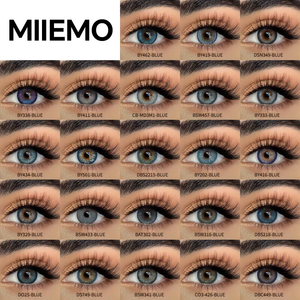
Extensive libraries with over 15,000+ validated graphics: 1-tone, 2-tone, 3-tone natural iris textures, highlight/glow matrices, and theatrical SFX prints.
9. Automated Blister Packaging
Hermetically sealed medical-grade PP blister packaging with peelable foil, validated autoclave steam sterilization (121°C), and 5-year shelf-life stability.
10. Agile Supply Chain Lead Times
Integrated manufacturing workflows enabling sample development within 7 business days, blister OEM batch completion in 20-30 days, and rapid sea/air dispatch.
Eyebeauty Technology: Four Decades of Ophthalmic Manufacturing Excellence
Within the landscape of Chinese contact lens producers, Eyebeauty Technology Co., Ltd. serves as the global sales, marketing, and regulatory headquarters for a family-founded industrial conglomerate whose origins trace back to 1984. Rather than operating as an intermediary trading firm, Eyebeauty represents direct factory ownership across two state-of-the-art production bases: Gansu Constar Technology Group and Hunan Liangguo Group (Hunan Haipuming Technology).
For over 42 years, the group has evolved from precision optical mechanics into a global powerhouse in contact lens production. Gansu Constar serves as the historical anchor, delivering decades of polymer engineering, lathe-cutting precision, and clinical research. Hunan Haipuming Technology represents modern high-speed manufacturing: a medical-industrial complex built with multi-million-dollar cleanroom molding lines, automated pad-printing centers, and automated blistering suites.
| Facility / Entity | Foundational Role | Cleanroom / Tech Standard | Core Certifications | Primary Production Lines |
|---|---|---|---|---|
| Eyebeauty Technology Co., Ltd. | Global Marketing & Export HQ | Digital QC & Global Logistics Hub | MDR/ISO Liaison | OEM/ODM Global Brand Deployment |
| Gansu Constar Technology Group | Foundational Optical Base (Est. 1984) | Class 100,000 Cleanroom & R&D | CE (MDR), ISO 13485 | Clear Vision Lenses, Bandage Lenses |
| Hunan Haipuming (Liangguo Group) | Cosmetic Color Mega-Factory | Full Cast-Molding Automation | ISO 13485, FDA Registered (FEI 3015587162) | 1/2/3-Tone Color Lenses, Daily Disposables |
By unifying proprietary house brands such as MILLCREEK, KSSEYE, Haipurecon, and DUOXIU with extensive private-label manufacturing programs, Eyebeauty equips international brand owners with turnkey support: from graphic iris design and blister foil branding to regulatory registration dossiers submitted directly to local health authorities.
Future Procurement Trends: What Global Contact Lens Buyers Must Prepare For (2026–2030)
Procurement directors and brand strategists operating in the cosmetic optical sector must align their purchasing strategies with emerging consumer habits, physiological expectations, and regulatory frameworks. The next five years will redefine how cosmetic lenses are specified, sourced, and merchandised across international markets:
The Ascendancy of Daily Disposables
While yearly and monthly lenses remain staple value drivers in South America and Southeast Asia, European, North American, and East Asian markets are rapidly pivoting toward 1-day daily disposables (1 Day/Pack) due to hygiene compliance and zero-maintenance convenience.
Silicone Hydrogel (SiHy) Migration
Cosmetic lenses are transitioning from conventional HEMA materials (Dk/t 15-28) to third-generation Silicone Hydrogel polymers (Dk/t 80-130). This allows prolonged 14-hour daily wear without inducing corneal hypoxia, limbal redness, or end-of-day dryness.
Hyper-Natural "K-Beauty" Aesthetics
Opaque dramatic costume blocks have largely given way to translucent, multi-layered gradient micro-dots. Modern consumers demand soft limbal boundaries, asymmetrical light-reflecting crescent arcs, and muted hazel/ash-grey tones that blend seamlessly with natural irises.
Engineering Trends Shaping Chinese Contact Lens Manufacturing
Technological differentiation in contact lens manufacturing separates basic factories from world-class exporters. China's top-tier cleanrooms are advancing several key technical developments:
1. Fully Integrated Fully Automated Cast Molding (FACM): Traditional spin-casting and manual mold insertion have been replaced by robotic closed-loop cast molding. Optical molds made of high-precision cyclic olefin copolymer (COC) ensure edge thickness deviations are kept under ±0.002 mm across multi-million piece manufacturing runs.
2. Micro-Injected Moisture Locks (HA and MPC Integration): To solve end-of-day dryness, leading factories are polymerizing Hyaluronic Acid (HA) and 2-Methacryloyloxyethyl Phosphorylcholine (MPC) directly into the backbone matrix. This creates a hydrophilic hydration barrier that resists lipid and protein deposition while keeping contact angles below 25 degrees.
3. Advanced Class II UV400 Absorption: Regulatory expectations now demand integrated UV radiation barriers. Advanced hydrogel monomers incorporate UV-absorbing benzotriazole chemical additives, blocking over 85% of UVA and 98% of UVB radiation without compromising optical transparency or color saturation.
Frequently Asked Questions (FAQ) for Importers & Brand Owners
Below are technical, regulatory, and commercial answers to the most common inquiries received by our international engineering desk:
Partner With China's Leading Contact Lens Manufacturing Group
Whether you are launching a private-label cosmetic lens brand, scaling an optical retail chain, or seeking a compliant OEM/ODM factory partner certified to ISO 13485 and CE (MDR) standards, our team is ready to assist with design sampling, regulatory support, and competitive factory pricing.
Send an Inquiry