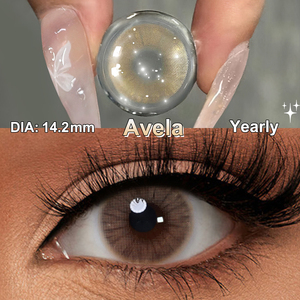
FreshGo HIDROCOR Colored Contact Lenses Wholesale Color Contact Lens Lensa Kontak Lentilles De Couleurs En Gros Les Lentilles
Natural Ringless
View Details →
Directly sourced from Class 100,000 cleanroom facilities. Explore high-performance soft color lenses, sterile custom packaging configurations, and certified optical accessories tailored for scalable private label distribution.
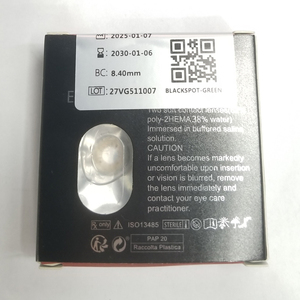
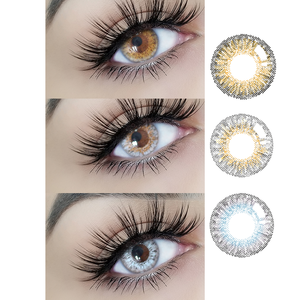
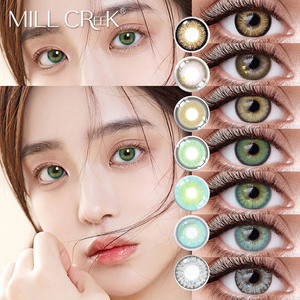
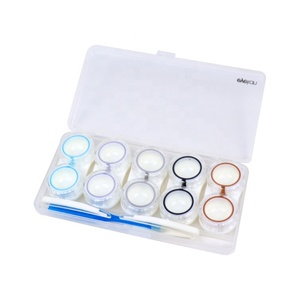
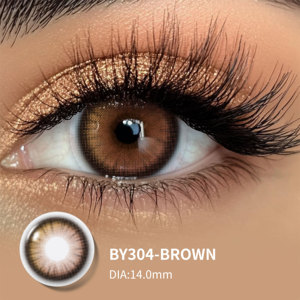
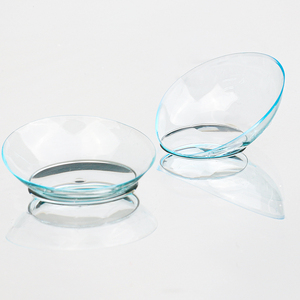
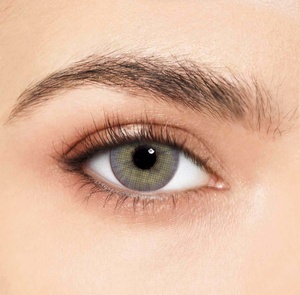
Established upon the dual industrial pillars of Gansu Constar Technology Group (est. 1984) and Hunan Liangguo Group (Hunan Haipuming Technology), we eliminate intermediary trading risks by providing integrated factory-to-brand execution.
Manufacturing soft hydrogel and silicone-hydrogel lenses under certified Class 100,000 cleanrooms. Fully compliant with international medical device standards: ISO 13485, CE (MDR), and FDA registration (FEI: 3015587162).
Our patented "sandwich" bio-printing technology embeds non-toxic color pigments completely between polymer layers. The pigment never touches the cornea, preventing ocular irritation while delivering high-definition iris depth.
End-to-end private labeling services spanning blister foil sealing, sterile buffer formulations, multilanguage barcoding, and local regulatory dossier compilation (including South Korea MFDS technical dossier frameworks).
Navigating China’s specialized optical manufacturing belts requires understanding the technical divergence between high-volume automated cast molding and specialized custom lathe-cutting facilities.
When selecting among China's top contact lens manufacturers, B2B optical buyers must evaluate technical execution capabilities rather than headline unit pricing alone:
The Chinese color lens export market is divided into two primary supply tiers, determining cost structure and supply continuity:
Strategic volume buyers must align their procurement cycles with structural shifts in consumer optical consumption, replacement schedules, and regulatory scrutiny through 2026–2030.
Global beauty consumers are transitioning rapidly from yearly and half-yearly lenses to daily disposable modalities. Sourcing programs are reallocating capital toward high-speed automated blister lines that optimize unit production cost at massive scale while eliminating consumer maintenance solutions.
Standard HEMA materials are increasingly supplemented by breathable fluorosilicone hydrogel matrices. Color printing onto silicone hydrogel without delamination or surface wettability loss represents the technological frontier, enabling all-day wear without hypoxic stress.
Driven by East Asian and K-Beauty aesthetics, purchasing preferences have shifted away from harsh limbal borders toward radial blending, soft-ash tones, and light-reflecting crescent highlight patterns. Importers require factories with high-resolution 3D pad printing systems.
Global regulatory authorities are enforcing Unique Device Identification (UDI) and strict batch serialization for all Class IIa/IIb cosmetic optical devices. Top manufacturers now deliver automated GS1-compliant Datamatrix codes on secondary packaging to ensure seamless custom clearances.
Digital marketing brands demand faster concept-to-shelf lead times. Leading Chinese production plants are shortening custom box proofing and pilot lot production cycles down to 15 to 20 business days, allowing optical brands to capitalize on seasonal beauty trends.
Environmental compliance mandates are driving the development of recyclable polypropylene blisters, thinner lidding foils, and FSC-certified biodegradable outer cartons. Sustainable packaging options are becoming a standard pre-requisite for European and North American retail distribution.
Clear, technically verified answers addressing regulatory clearance, MOQ structures, quality assurance protocols, and custom brand formulation.
For ready-to-ship stock catalog designs under our private label packaging programs, MOQs start as low as 100 pairs across mixed diopter powers. For completely custom shade formulations, specialized graphic diameter patterns, or proprietary base curve geometries, custom casting MOQs typically require 1,000 to 5,000 pairs per SKU depending on replacement cycle specifications.
Our manufacturing processes utilize full double-sided cast encapsulation ("sandwich method"). Each lot undergoes exhaustive Soxhlet solvent extraction testing, rub-resistance shear tests, and spectrophotometric elution profiling in saline buffer solutions, confirming zero colorant leaching and strict compliance with ISO 10993 biological evaluation standards.
Yes. While the regional importer acts as the legal holder of local device approvals, Eyebeauty provides the complete technical documentation bundle: ISO 13485 audit certificates, CE (MDR) conformity declarations, aging stability reports, packaging integrity validations, biocompatibility dossiers, and sterilization validation records required for successful dossier sign-off.
Standard inventory stock products ship within 7 to 10 working days upon order confirmation. For custom private label OEM runs requiring blister tool adjustment, box die-cutting, foil printing, and full batch autoclave incubation cycles, lead times average 25 to 35 calendar days from final digital proof sign-off.
Connect directly with our senior optical engineering and international OEM private label consulting team. Request custom material specifications, wholesale bulk pricing tiers, and certified cleanroom manufacturing tours.
Contact Us