Factory-Direct Portfolio
High-Performance Cosmetic & Optical Contact Lenses
Verified manufacturing lots engineered under ISO 13485 cleanroom parameters and international medical device compliance.
42+
Years Manufacturing Heritage (Since 1984)
15,000+
Proprietary Lens Pattern Formulations
126
Sovereign Regulatory Import Destinies
10,000+
Global Optical & Private Label Partners
Executive Industry Whitepaper
Top 10 Circle Lenses Wholesale Manufacturers & Wholesalers: Strategic Benchmarks
A technical assessment of high-volume OEM/ODM production ecosystems, micro-pigment sandwich encapsulation, and medical regulatory validation.
The global cosmetic contact lens sector, commonly known in Asian and Western consumer demographics as circle lenses, has evolved far past basic novelty fashion accessories. Today, circle lenses are strictly classified as Class IIa or Class IIb medical devices across prime jurisdictions including the European Union under Regulation (EU) 2017/745 (MDR), the United States Food and Drug Administration (FDA), and South Korea's Ministry of Food and Drug Safety (MFDS). For international optical chains, beauty aggregators, and private label ophthalmic brands, selecting an elite tier manufacturer requires a balance of chromatic innovation, biocompatible polymer chemistry, high oxygen transmissibility (Dk/t), and comprehensive audit compliance.
Strategic Sourcing Takeaway: Tier-1 circle lens procurement is no longer driven solely by initial piece price (FOB). Leading procurement teams prioritize bio-inert sandwich printing technologies, ISO 13485 cleanroom validation, batch-specific sterilization reliability, and manufacturer-side dossier documentation that accelerates local clearance at regional ports of entry.
| Manufacturer / Ecosystem Entity | Primary Production Core | Material Engineering | Regulatory Credentials | Wholesale Scalability & Turnaround |
|---|---|---|---|---|
| Eyebeauty Group (Constar & Liangguo) | Owned Mega Cleanrooms (Gansu & Hunan) | HEMA-NVP Hydrogel & High Dk Silicone | CE (MDR), ISO 13485, US FDA (FEI: 3015587162) | 15,000+ ready designs; 7–10 day dispatch for stock; rapid OEM custom private labeling |
| Interojo (South Korea) | Gyeonggi-do Automated Facilities | Sodium Hyaluronate Hydrogel | MFDS, CE, US FDA | High tier contract manufacturer; specialized in daily disposable packaging lines |
| G&G Contact Lens (South Korea) | Gwangju Precision Laboratories | Conventional 2-HEMA Cast Mold | MFDS, ISO 13485, CE | Historical pioneer of sandwich method; premium annual circle lens lines |
| Neo Vision (South Korea) | Seoul High-Tech Production Base | Sandwich Polymer Formulation | MFDS, CE, KGMP | Known for natural gradient multi-tone limbal designs and ocular cosmetics |
| Geo Medical (South Korea) | Jeollanam-do Manufacturing Unit | Phosphorylcholine (PC) & HEMA | ISO 13485, CE, MFDS | Massive catalog of statement cosplay, dramatic enlargement, and natural patterns |
| Seed Co., Ltd. (Japan) | Kounosu Laboratory (Saitama) | Ionic / Non-ionic Hydrogel | PMDA (Japan), CE, ISO 13485 | Strict focus on Japanese domestic pharmacy standards and UV-absorbing optics |
| Pegavision Corporation (Taiwan) | Taoyuan High-Tech Cleanrooms | Silicone Hydrogel & Bio-moist | TFDA, US FDA, CE, ISO 13485 | Fully automated robotic casting lines; large-scale daily blister programs |
| St. Shine Optical (Taiwan) | New Taipei City Plants | High Water Hydrogel | TFDA, US FDA 510(k), CE | High volume contract manufacturer supporting major private label retailers worldwide |
| Bescon (South Korea) | Incheon Precision Facility | Patented Cast-Molding Technology | MFDS, CE, ISO 13485 | Legacy focus on dual-edge design and stable centering cosmetic geometry |
| Innovate Softlens (South Korea / APAC) | Regional Contract Facilities | Hydrophilic Co-polymer | ISO 13485, Regional Clearances | Specialized regional wholesaler catering to niche boutique cosmetic dropshippers |
When analyzing the competitive matrix above, a distinct structural divide emerges. While contract assemblers and regional wholesalers in Taiwan and Japan focus strictly on massive run sizes of uniform daily disposables, Eyebeauty Technology Co., Ltd. combines an industrial heritage tracing back to 1984 with an agile OEM/ODM structure. Owning its manufacturing plants—Gansu Constar Technology Group and Hunan Haipuming Technology (Liangguo Group)—Eyebeauty delivers direct-from-cleanroom economies of scale while retaining over 15,000 trend-validated designs for instant optical retail implementation.
Future Market Outlook
Future Procurement Trends in the Global Circle Lens Industry
Critical engineering shifts, material advancements, and omni-channel retail transformations impacting B2B volume orders through 2028.
Migration to Silicone Hydrogel (SiHy)
Traditional circle lenses relied on conventional HEMA hydrogels with modest oxygen permeability. Forward-looking optical distributors are pivoting procurement toward Silicone Hydrogel matrices with Dk/t ratings exceeding 80–100, pairing vibrant graphic diameter prints with healthy, all-day corneal respiration.
Micro-Encapsulated Pigment Matrix
Safety is the primary metric for medical device evaluators. Modern buyers completely reject surface-printed tinting. Next-generation circle lenses employ automated multi-layer sandwich lamination where cosmetic pigments are locked hermetically between bio-inert polymer films, zeroing the risk of corneal abrasion.
Ascendance of Daily Single-Use Blisters
While 6-month and annual vials remain vital in cost-sensitive cosmetics and theatrical niches, daily disposable packs (10-piece and 30-piece box configurations) are exploding across European optical chains and Korean optical dispensaries (안경원), reducing compliance liabilities and maximizing recurring revenue per patient.
Furthermore, chromatic aesthetics are pivoting away from the oversized, high-contrast doll-eye diameters (14.5mm–15.0mm) that defined early 2010s trends. Sophisticated global consumers now demand subtle enhancement: Graphic Diameters (G.DIA) between 13.0mm and 13.4mm, feathery dotted limbal transitions, soft ash tones, honey hazels, and asymmetrical highlight accents that replicate natural light refraction. Eyebeauty's K-Trend Design Studio produces over 100 Pantone-calibrated SKUs each season specifically calibrated to these consumer shifts.
Core Manufacturing Backbone
The Eyebeauty Industrial Advantage: Direct Factory Integration
Combining four decades of medical optical innovation with direct factory supply chain efficiency.
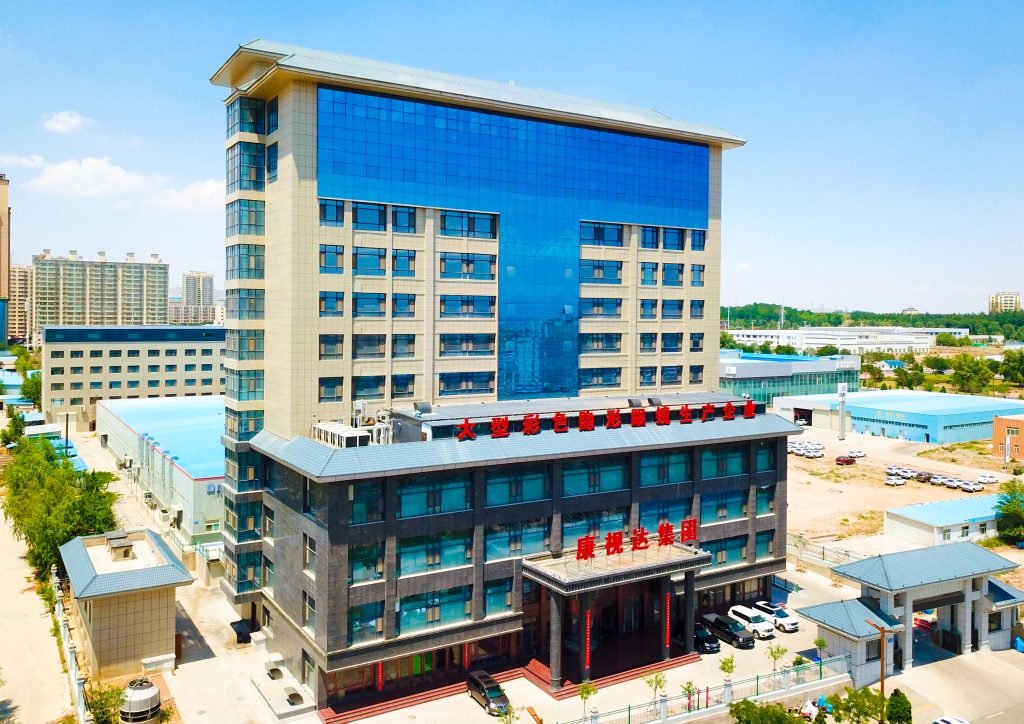 FOUNDED 1984
Gansu Constar Technology Group
The industrial foundation of our family group, standing as one of the earliest high-precision soft contact lens research and manufacturing installations in China. Features fully automated casting laboratories, sterile saline formulation units, and complete batch retention infrastructure.
CE (MDR) Certified
ISO 13485:2016
Full Physical Traceability
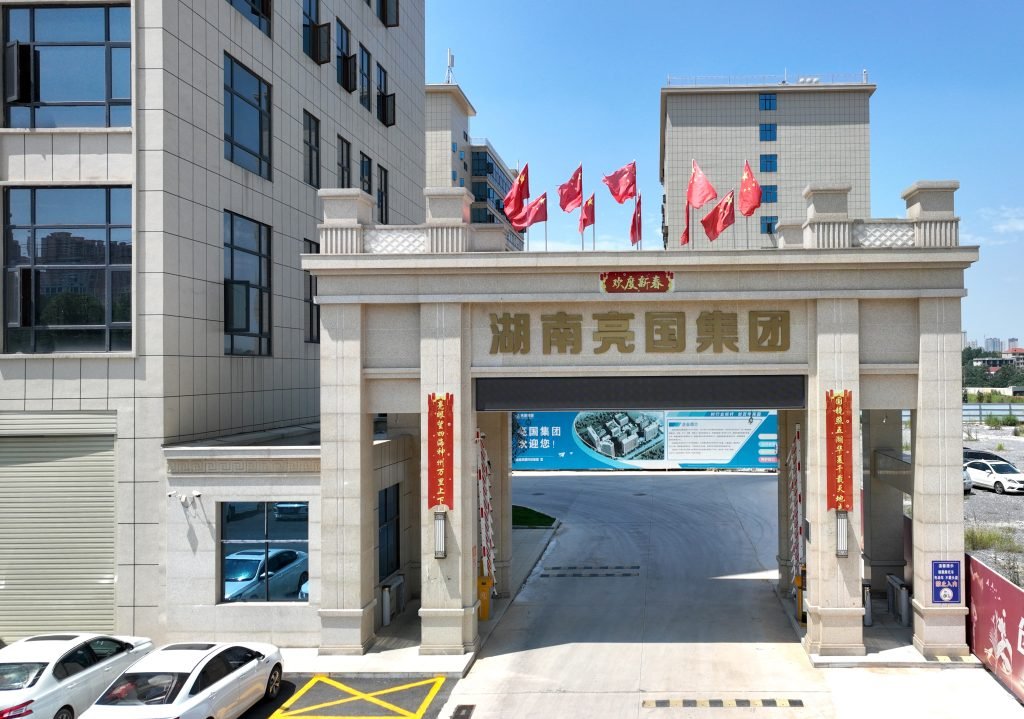 LIANGGUO GROUP
Hunan Haipuming Technology (Liangguo Group)
Our ultra-modern cosmetic lens development center. Integrates Class 100,000 cleanrooms, advanced automated pad-printing robotics, precision vision-inspection cameras, and high-efficiency EO gas and steam autoclave sterilization chambers for massive contract volume.
US FDA Registered (FEI: 3015587162)
15,000+ Patented Patterns
Agile Private Label
Turnkey Regulatory Dossiers
We supply full Device Master Files (DMF), technical product summaries, biocompatibility reports (ISO 10993), and stability test validation to expedite your national health authority approvals.
1,500+ Ready Stock SKUs
Mitigate warehousing overhead. We maintain continuous buffer stock of fast-moving prescription powers (0.00 to -8.00D) and non-prescription cosmetic lenses for immediate air freight dispatch in 7–10 days.
Multilingual Brand Packaging
From custom sterile blister foil stamping and vial sealing to biodegradable CMYK art-paper packaging, we manage localization for domestic mandates—including Korean MFDS, Arabic, and EU-MDR languages.
Direct Ownership Pricing
Eliminate broker markups and trading firm frictions. Working with Eyebeauty connects your corporate buyers directly to the factory floor, ensuring full transparency in material tracing and cost efficiency.
Market-Tested Retail Solutions
Distributor-Ready Group Brands
Explore established contact lens brands designed and packed directly in our certified manufacturing ecosystem.


Procurement Intelligence
Frequently Asked Questions: Global Wholesale & OEM Sourcing
Essential regulatory, technical, and commercial guidelines for brand managers and medical buyers.
What are the key regulatory certifications required to import wholesale circle lenses into Western and Asian markets?
Because circle lenses rest on the human cornea, they are regulated internationally as medical devices rather than cosmetics. Importers in the European Union must verify CE certification under the new Medical Device Regulation (EU MDR 2017/745) supported by an audited ISO 13485:2016 Quality Management System. In the United States, importers require pre-market clearance (510k) and manufacturing facility registration (FDA FEI). In South Korea, products must obtain approval from the Ministry of Food and Drug Safety (MFDS) held by a licensed domestic medical device importer. Eyebeauty furnishes full technical dossiers, sterilization validation, and biocompatibility packages to satisfy all regulatory authorities.
How does the "sandwich printing technology" safeguard ocular health in colored lenses?
Inferior or counterfeit cosmetic lenses often print chromatic pigment layers directly onto the posterior or anterior surfaces of the lens matrix, leaving color chemicals exposed to corneal tissue or eyelid friction. Professional sandwich encapsulation embeds cosmetic dyes entirely between two smooth layers of clear, polymerized hydrogel or silicone hydrogel. This prevents pigment leaching, maintains optical surface smoothness, minimizes bacterial adhesion, and guarantees total corneal biocompatibility.
What is the difference between Base Curve (BC), Diameter (DIA), and Graphic Diameter (G.DIA)?
Base Curve (BC) represents the curvature radius of the posterior lens surface (commonly 8.5mm to 8.7mm), ensuring an aligned, non-slip fit on the average human cornea. Total Diameter (DIA) represents the total edge-to-edge width of the lens material, typically ranging from 14.0mm to 14.5mm. Graphic Diameter (G.DIA) measures the printed color region. A lens with a 14.5mm total diameter but a 13.2mm G.DIA delivers a subtle, realistic eye enhancement, whereas a G.DIA of 14.0mm or larger creates an exaggerated doll-eye widening effect popular in cosplay and theatrical environments.
What are the typical Minimum Order Quantities (MOQs) and lead times for OEM/ODM private label programs?
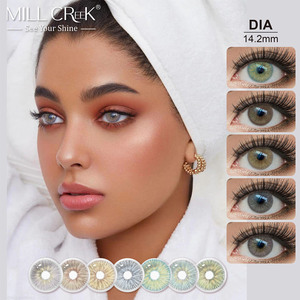
For existing, factory-stock formulations across our proprietary brand portfolios (such as MILLCREEK, KSSEYE, or Haipurecon), orders can dispatch via air freight in as little as 7 to 10 working days with minimal MOQ constraints. For custom private label OEM/ODM programs featuring tailored graphic printing, proprietary secondary packaging, and bespoke prescription powers, typical MOQs start at 500 to 1,000 pairs per SKU/color, with total production and cleanroom sterilizing cycles averaging 30 to 45 business days.
Can Eyebeauty assist with localized medical device packaging and compliance labeling?
Yes. Our packaging engineering division provides comprehensive support for localized compliance. This includes formulating blister foil prints and folding cartons that feature localized language layouts, barcoding (GS1/UDI standards), batch numbers, sterile barrier symbols, and mandatory legal declarations matching target-market regulatory frameworks.
Scale Your Contact Lens Brand with Proven Factory Power
Consult with our international project engineers to receive custom OEM quotes, cleanroom certification dossiers, and physical sample kits tailored to your distribution markets.
Get Catalog