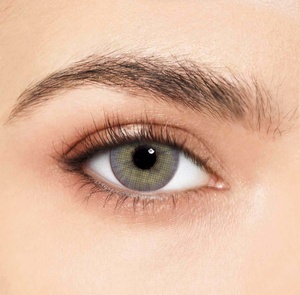
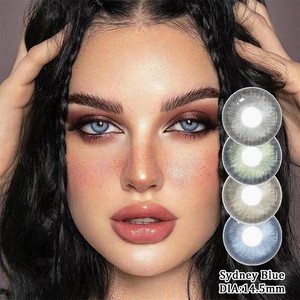
Popular Natural Soft Contact Lenses Certified
- Material: Hydrogel (Polymacon / HEMA)
- Water Content: 38% - 42% Opti-Balance
- Base Curve: 8.5mm - 8.6mm
- Diameter: 14.0mm - 14.2mm Natural Fit
Source directly from our automated cast-molding production lines. Fully certified for global distribution with complete batch traceability, blister foil customization, and regulatory dossier compliance.
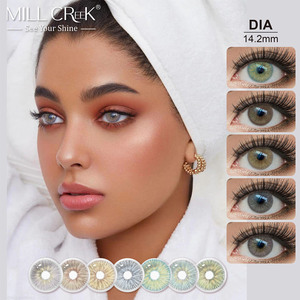
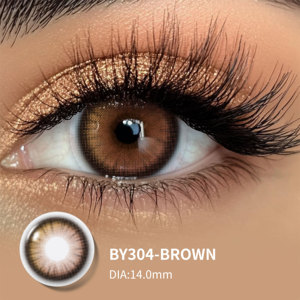

The manufacturing lineage of Eyebeauty Technology Co., Ltd. represents one of the earliest high-precision contact lens initiatives in Asia. Originating in 1984 with the inception of Gansu Constar Technology Group, our industrial footprint expanded through key infrastructure investments into Hunan Liangguo Group and its flagship medical-device cleanroom base, Hunan Haipuming Technology Co., Ltd. Today, Eyebeauty acts as the consolidated international headquarters, driving technical R&D, brand incubation, private label development, and global trade compliance.
Unlike sourcing intermediaries, trading agencies, or third-party digital storefronts, Eyebeauty exercises complete vertical control over every phase of contact lens fabrication. From raw polymer monomer synthesis and computer-guided optical mold fabrication to sanitary cleanroom cast molding, pigment micro-encapsulation, automatic blister sealing, terminal moist-heat sterilization, and full-spectrum automated optical inspection (AOI), our end-to-end framework guarantees uncompromised physiological safety and batch-to-batch visual accuracy.
Operating under stringent global standards, our production nodes hold CE (MDR 2017/745) certification, comprehensive ISO 13485:2016 medical device quality management accreditation, and official facility registration with the US FDA (FEI: 3015587162). This technological bedrock empowers global optical distributors, luxury retail chains, private cosmetic labels, and ophthalmological clinic groups to scale their brand presence with absolute regulatory and ocular peace of mind.
High-volume manufacturing precision paired with agile boutique personalization. We deliver technical depth and rapid market-entry execution.
Our proprietary Sandwich Color Embedding Technology locks non-toxic, biocompatible micro-pigments firmly between two pristine layers of optical hydrogel polymer. No cosmetic pigment ever touches the corneal epithelium or palpebral conjunctiva, completely eliminating mechanical abrasion, pigment leaching, and allergic keratitis risks.
With an active archive exceeding 15,000 distinct optical and graphic prints, and more than 1,500 evergreen SKUs maintained in our temperature-controlled central hub, we support both pilot sampling and rapid container shipments. Standard catalog dispatches fulfill within 7–10 days, while custom OEM formulations move swiftly from lab proofs to volume release.
Entering tightly policed markets demands exhaustive documentation. Our dedicated regulatory affairs department prepares turnkey technical dossiers, including biocompatibility summaries (ISO 10993), sterilization validation (ISO 11137 / ISO 17665), and stability analytics, specifically optimized for Korean MFDS, European CE MDR, and Americas regional filings.
The global cosmetic contact lens sector is rapidly evolving from a niche fashion accessory market into an integrated segment of high-tech dermatological and ocular wellness. Category buyers, brand founders, and procurement directors must align their supply chains with four defining market dynamics:
| Procurement Vector | Legacy Industry Standard | Next-Generation Paradigm (2025-2030) | Procurement Strategic Impact |
|---|---|---|---|
| Base Polymer Chemistry | Conventional 2-HEMA Hydrogel (Dk/t: 8–15) | Silicone Hydrogel (SiHy) Composites (Dk/t: 60–120+) | Extended daily wear without hypoxic stress; crucial for premium brand positioning. |
| Wear Modality Ratio | Long-cycle Yearly & Quarterly Vials (55%) | Single-Day Daily Disposables in Ultra-Slim Packs (75%) | Accelerates inventory turns, elevates hygienic safety, and maximizes customer lifetime value. |
| Visual Design Aesthetics | High-contrast, artificial ring diameters (14.5mm+) | Hyper-natural micro-dots, ash-undertones, and 3D glow depths | Aligns with minimalist "clean-look" makeup and authentic K-Beauty consumer preferences. |
| Packaging Ecology | Standard virgin plastic blisters and heavy paper cartons | Biodegradable polymers, reduced-foil trays, and FSC paper | Mandatory requirement for retail placement in Tier-1 department chains and EU markets. |
Procurement professionals are increasingly shifting away from multi-tiered broker networks to forge direct alliances with vertically integrated primary factories. This strategy protects supply continuity, guarantees consistent dye formulations across production cycles, and minimizes customs clearance risks associated with inadequate medical device technical documentation.
Discover the physical, chemical, and optical innovations redefining modern ocular device manufacturing.
Combining high oxygen transmissibility (high Dk/t) with stable multi-color printing was historically limited by silicone's hydrophobic nature. Modern plasma surface treatments and internal wetting agents (PVP/HA) now ensure vibrant color reproduction alongside all-day corneal breathability.
Transitioning from labor-intensive lathe-cutting to automated CNC dual-mold cast systems guarantees micron-level geometric repeatability across optical surfaces. This automation slashes unit defect rates to less than 0.01% while lowering B2B contract unit pricing.
Using sub-micron cosmetic iron oxides, titanium dioxides, and phthalocyanines processed via wet-bead nanonization, our color matrices achieve ultra-realistic iridial striations, gradual luminescent transitions, and complete opacity control over dark Asian eyes.
Modern consumers expect integrated biological protection. We integrate Class I and Class II UV-absorbing monomers directly into the polymeric matrix, blocking over 90% of UVA and 99% of UVB radiation without altering lens chromatic neutrality or color fidelity.
Building a compliant, profitable color contact lens brand requires seamless collaboration between design teams, cleanroom chemical engineers, and regulatory specialists. Our standardized 4-stage deployment roadmap ensures predictable execution on every production run:
Clients choose from our 15,000+ proprietary graphic patterns or provide custom Pantone references. We calibrate dot density, pupil aperture clearance, and outer limbal transitions to ensure natural eye blending.
Tooling of pilot optical molds, precision cast-molding, and automated hydration in buffered saline. Pilot lenses undergo cytotoxicity, ocular irritation, and extractable chemical testing in full compliance with ISO 10993 standards.
Complete structural design of thermoformed PP blisters, medical-grade dialysis peel foils, and customized retail boxes with country-specific UDI barcodes, batch codes, and importer-approved regulatory markings.
Class 100,000 cleanroom manufacturing, automated multi-angle vision inspections, high-pressure steam terminal sterilization at 121°C, and temperature-controlled DDP freight delivery directly to your distribution center.
Clear, direct answers regarding regulatory protocols, minimum order thresholds, chemical safety, and global delivery logistics.
In South Korea, contact lenses are classified and regulated as Class II or Class III medical devices by the Ministry of Food and Drug Safety (MFDS). While the domestic Korean license must be held by an authorized local importer or distributor, Eyebeauty furnishes the complete technical and manufacturing dossier required for Korean submission. This includes our ISO 13485 certificates, CE technical construction files, raw material characterization data, chemical purity profiles, ISO 10993 biological evaluation reports, moist-heat sterilization validation records, and real-time accelerated stability data.
For existing catalog graphics using our standard hydrogel formulations with custom brand packaging (custom outer retail box and branded blister lidding foil), our entry MOQ starts at an accessible 1,000 to 3,000 pairs per SKU across standard diopter distributions. For entirely bespoke graphic formulations—including customized print plates, non-standard diameters (e.g., 14.5mm or mini-scleral 15.0mm), or specialty silicone-hydrogel materials—the baseline run is typically 5,000 to 10,000 pairs per design to offset custom tooling and mold-cavity calibration.
We strictly employ an advanced Semi-Cast Sandwich Embedding Technology. In this manufacturing sequence, the front convex layer of the lens is polymerized, after which cosmetic pigment ink is precision-printed using micro-pad deposition onto the unpolymerized base. A secondary layer of optical monomer is then cast over the ink, sealing the pigments entirely within the internal cross-linked polymer matrix. Physical rubbing, swab solvent extractions, and mechanical stress tests confirm that no dye particles ever reach the lens surface.
Yes. In addition to spherical cosmetic lenses ranging from Plano (0.00) up to -10.00 diopters, our advanced CNC tooling supports prism-ballast and back-surface toric designs for astigmatic patients. Toric cosmetic contact lenses require strict rotational stability to ensure both crisp visual acuity and correct aesthetic alignment on the eye. We develop custom toric molds with precise cylinder ranges from -0.75D to -2.75D across axes from 10° to 180° upon request.
For first-time OEM private label projects requiring custom brand artwork approvals, packaging plate manufacturing, and regulatory proofing, lead times generally range between 35 and 45 business days following deposit receipt and sample sign-off. For subsequent scheduled reorders of finalized packaging SKUs, our automated cast-molding and packaging lines reduce turnaround times to just 20 to 25 business days, ensuring consistent stock availability for retail partners.
All finished blister packages undergo terminal moist-heat steam sterilization in industrial computerized autoclaves at 121°C (250°F) for an exposure duration calibrated to guarantee a minimum Sterility Assurance Level (SAL) of 10⁻⁶, strictly adhering to ISO 17665 standards. Hermetic package integrity and foil peel seals are continuously tested via burst pressure tests, bubble emission leak tests (ASTM F2096), and tensile peel strength analytics (ASTM F88) to guarantee a reliable 5-year sterile shelf life.