Verified Supply Lines
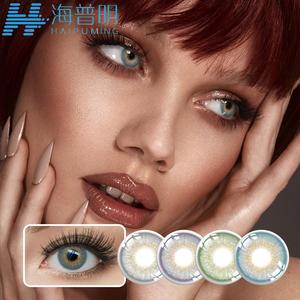
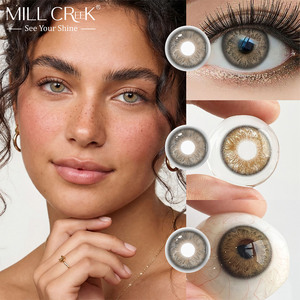
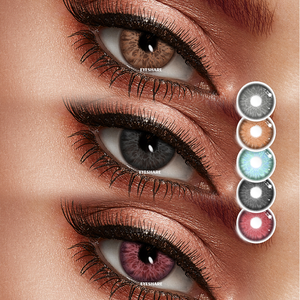
Featured OEM/ODM Cosmetic & Optical Formulations
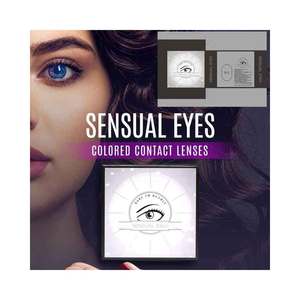
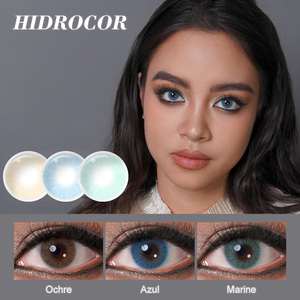
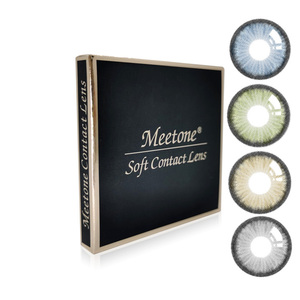
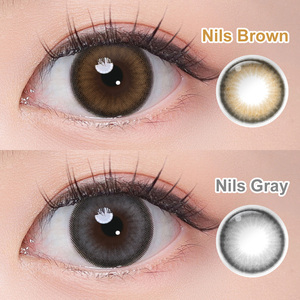
Direct factory configurations available for custom base curves, diameters, color matrices, and private label sterile packaging.
42+
Years Manufacturing Pedigree (Since 1984)
15,000+
Proprietary Optical Color Formulations
126+
Export Destination Markets Served
10,000+
Global B2B & Optical Chain Partners
Industrial Benchmark
Why Optical Brands & Distributors Partner With Our Factories
Direct access to state-owned-grade cleanrooms, dual manufacturing hubs, and unmatched regulatory compliance frameworks.
Stringent Medical Accreditation
Production hubs governed under ISO 13485:2016 quality management systems. Fully certified under European Union CE (MDR 2017/745) Class IIa medical device regulations, with facilities registered under US FDA FEI: 3015587162.
Dual Industrial Production Hubs
Operating Gansu Constar Technology Group (our foundational vision facility established in 1984) and Hunan Haipuming Technology (Liangguo Group), scaling over 12 automated cast-molding lines with zero cross-contamination protocols.
Cast-Molding Sandwich Technology
100% molecular color locking via dual-sided casting. Pigments are encapsulated entirely within the hydrogel matrix, guaranteeing that zero dye molecules make physical contact with the cornea or palpebral conjunctiva.
Turnkey Regulatory Support
Providing full technical dossiers (STED), biocompatibility data (ISO 10993 cytotoxicity, ocular irritation, systemic toxicity), extractables/leachables validation, and specialized documentation for Korean MFDS, NMPA, and Saudi SFDA clearance.
Technical Engineering
Optical Substrates, Micro-Pigmentation, and Biocompatibility
A comprehensive engineering breakdown for optical directors, brand founders, and institutional buyers.
In contemporary aesthetic ophthalmics, the intersection of ocular physiology and chromatic realism dictates market performance. The contact lens is not merely a cosmetic accessory; it is a Class IIa/Class IIb prescription medical device that interfaces directly with the pre-corneal tear film (PCTF). Our OEM/ODM manufacturing protocols prioritize the stabilization of oxygen transmissibility (Dk/t), wettability balance, and tear film turnover to eliminate hypoxic stress and papillary conjunctivitis.
Historically, cosmetic colored contact lenses utilized surface printing technologies, wherein colorants were stamped directly onto the anterior or posterior surface of the polymerized hydrogel. This archaic practice resulted in raised textural irregularities, increased microbial adherence (notably Pseudomonas aeruginosa and Acanthamoeba), and potential dye leaching under sustained friction. At our Gansu and Hunan production hubs, all cosmetic contact lenses are manufactured utilizing Advanced Full-Cast Semi-Molded Sandwich Encapsulation.
The Sandwich Principle: Non-toxic, pharmaceutical-grade biocompatible inorganic pigments (titanium dioxide, iron oxides, phthalocyanine blue) are positioned between an anterior and posterior hydrogel layer before thermo-chemical or ultraviolet curing. The final single-matrix lens exhibits a completely smooth, continuous surface topography, matching the surface tension and lipid-resistance of medical-grade clear contact lenses.
| Material Classification | Water Content (%) | Oxygen Permeability (Dk) | Modulus (MPa) | Recommended Replacement Cycle | Ideal Procurement Application |
|---|---|---|---|---|---|
| Poly-HEMA (Classic Hydrogel) | 38% – 42% | 8.5 – 12 x 10⁻¹¹ | 0.30 – 0.45 | Monthly, 6-Month, Yearly | High physical durability, dimensional stability, budget-optimized wholesale distribution. |
| HEMA-NVP Copolymer (High Water) | 55% – 58% | 18 – 22 x 10⁻¹¹ | 0.35 – 0.50 | Daily Disposable (1-Day) | Exceptional initial comfort, rapid tear exchange, premium retail pharmacy positioning. |
| Silicone Hydrogel (SiHy Gen III) | 45% – 48% | 65 – 100+ x 10⁻¹¹ | 0.55 – 0.75 | Daily, Monthly Disposable | High-end clinical optical chains, extended daily wear, professional doctor-prescribed lines. |
Every batch leaving our automated lines undergoes 100% in-line optical inspection. Using advanced Automated Optical Inspection (AOI) vision hardware calibrated to 5-micrometer sensitivity, lenses are checked for edge tear defects, peripheral concentricity errors, surface inclusions, and pigment displacement from the pupillary clear optical zone (standardized between 3.8mm to 4.2mm to prevent nocturnal visual vignetting).
Procurement Intelligence
Future Sourcing Trends in the Global Color Contact Lens Market
Strategic guidance for B2B procurement managers, chain optical directors, and private label brand owners navigating 2025–2030 market realities.
1. The Shift to Daily Disposables (1-Day)
Global consumer behavior is pivoting decisively away from long-term wear (yearly vials) toward single-use daily blisters. In established markets (North America, Western Europe, Japan, South Korea), daily disposables now command over 65% of color lens dollar volume due to eliminated compliance friction, lower microbial keratitis risks, and enhanced freshness.
2. Hyper-Natural "Iris Mimicry" Dot Printing
Gone are the days of dense, opaque, single-tone block prints. Contemporary K-beauty and Western aesthetic trends require multi-tonal dot-matrix layering (3 to 4 passes) with asymmetric radial highlighting, graduated pupillary margins, and feather-soft outer limbal rings that simulate organic collagen fibrils in human irises.
3. Regulatory Harmonization & Traceability
Regulatory authorities are eliminating grey-market exports. The implementation of the EU Medical Device Regulation (MDR 2017/745), US FDA Unique Device Identification (UDI) tracking, and Korean MFDS Good Manufacturing Practice mandates rigorous validation of every supplier's raw monomers, packaging hermeticity, and autoclave steam cycles.
4. Digital Try-On Integration & Fast Iteration
Direct-to-consumer (DTC) brands and retail optical chains are heavily integrating augmented reality (AR) virtual mirrors. Sourcing managers increasingly require ODM factories that can turn high-resolution digital iris artwork into physical, biocompatible prototype master molds within a 15-day development window to capitalize on viral cosmetic trends.
5. Sustainable & Smart Blister Packaging
Procurement audits now actively evaluate packaging sustainability. Brand owners are demanding medical-grade polypropylene (PP) blister trays with reduced wall thickness, peelable foil laminates requiring less heat energy during ultrasonic sealing, and non-PVC secondary paperboard boxes certified by the Forest Stewardship Council (FSC).
Procurement FAQ
Frequently Asked Technical & Sourcing Inquiries
Clear, actionable answers addressing compliance, formulation minimums, packaging options, and logistics lead times.
What is the standard Minimum Order Quantity (MOQ) for custom private label colored lenses?
For existing, pre-validated catalog color designs packed under your custom private label outer box and blister foil, our standard MOQ begins at 500 to 1,000 pairs per SKU/color across standard plano (0.00D) and corrective power arrays (-1.00D to -8.00D). For fully bespoke ODM color design development requiring novel micro-plate engraving, specific base curve tooling, or unique color matrices, the initial prototype run typically requires 3,000 pairs per shade to optimize automated cast-molding efficiency.
How do you guarantee that pigments will not leach or migrate onto the patient's ocular surface?
All lenses are produced using our proprietary cast-molding sandwich technology. Color pigments are chemically locked between two micro-thin monomer layers prior to final polymerization and hydration. We validate this using ISO 10993 cytotoxicity testing, organic solvent extraction testing (using hexane and ethanol under reflux), and automated atomic force microscopy (AFM) surface profilometry, certifying zero pigment exposure on either the anterior or posterior surface of the finished lens.
Can your facility supply technical documentation for registration with the US FDA, CE MDR, or South Korean MFDS?
Yes. As legal manufacturer and OEM/ODM parent group, we supply complete Summary Technical Documentation (STED) dossiers. This includes ISO 13485:2016 factory audit certificates, CE MDR technical files, biocompatibility dossiers (ISO 10993 series), real-time and accelerated shelf-life stability data (validating up to 5-year packaging sterility), steam sterilization validation reports (ISO 17665), and clinical evaluation summaries required by national health authorities worldwide.
What sterile packaging configurations do you offer (Blisters vs. Vials)?
We provide both formats based on your target market channel:
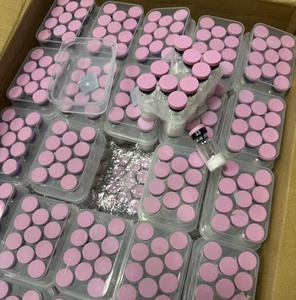
- Polypropylene (PP) Blister Packs: Ideal for daily, bi-weekly, and monthly modalities. Ultrasonic-sealed with high-barrier multi-layer aluminum foil, printed with your custom branding, lot number, base curve, diameter, diopter power, and GS1-compliant UDI DataMatrix codes.
- Sterile Glass Vials (Borosilicate Type I): Preferred for traditional yearly-wear markets and professional optical dispensing. Sealed with pharmaceutical butyl rubber stoppers and tamper-evident aluminum tear-off caps.
What are the standard production lead times from artwork confirmation to dispatch?
For ready-to-ship catalog inventory requiring custom over-labeling or unbranded bulk export, orders are typically fulfilled in 7 to 10 working days. For custom private label OEM runs involving bespoke blister foil and box printing, standard production timelines are 25 to 35 calendar days following proof approvals. Reorders with pre-approved printing components consistently ship within 18 to 22 business days.
Do you support corrective power prescriptions (Myopia) and Toric options for astigmatism?
Absolutely. In addition to standard plano (0.00 diopter) cosmetic lenses, our automated optics lines manufacture corrective powers ranging from -0.50D to -6.00D in 0.25D steps, and from -6.50D to -10.00D in 0.50D steps. Custom toric cast-molds featuring prism-ballast or peri-ballast rotational stabilization are also available for specialty astigmatic OEM programs upon technical evaluation.
Accelerate Your Brand with a Certified Manufacturing Partner
Request physical sample kits, shade guides, factory audit certifications, or complete private label quotation sheets directly from our international export desk.
Get Catalog