Featured Wholesale & Custom OEM Formulations
Factory-direct cast-molded cosmetic contact lenses engineered under ISO 13485:2016 and CE MDR standards. Available for private labeling, custom chromatic blending, and tailored water-content hydration parameters.
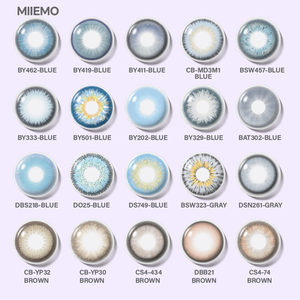
2026 Best Selling Colored Contact Lenses Soft Natural Eye Lenses ISO Certified 38% Water Content Half Year Using Cycle Wholesale
Rich Brown Contact Lenses 14.5mm Soft Eye Contacts
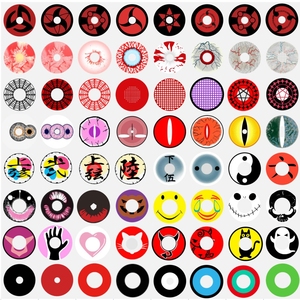
Free Shipping Items Pseyeche Halloween Contacts Crazy Sharingan Eye Lens Anime Cosplay Contact Lenses Lentes De Contacto
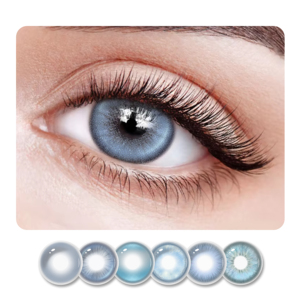
Haipurecon Sweet and Dreamy Blue Color Scheme Beautiful Eyes Annual Wholesale of Contact Lenses
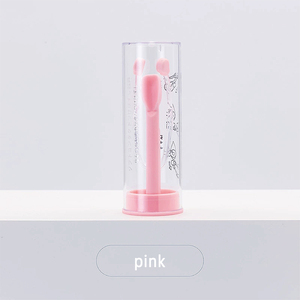
OK Lenses Eye Care Wearing Tool RGP Silicone Suction Stick Removal Eye Contact Stick in Plastic Tube Factory Lens Hot Sell
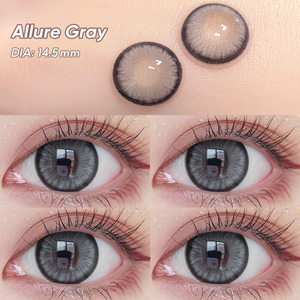
Hot Magister Lenses Contact Prescription Contact Lenses Confortable Lenses Eye Contact Best Seller Eye Lens Lentes De Contato
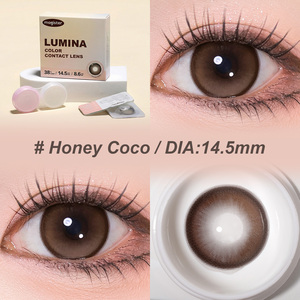
Full Color Printed Contact Lens Magister Lumina Colored Contact Lenses 6 Months Eye Contact 14.5mm Eye Lens Lentes De Contacto
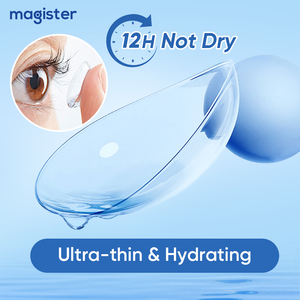
Power Eye Contact Lenses Soft clear Len for Myopia Prescription Contact Lenses Transparent Hydrogel Clear Vision Contact Lenses
Four Decades of Medical Contact Lens Engineering
Our lineage stretches back to 1984 with the establishment of Gansu Constar Technology Group, continuing through our modern expansion at Hunan Liangguo Group (Hunan Haipuming Technology). As Eyebeauty Technology Co., Ltd., we operate as the global direct manufacturing headquarters, eliminating trading intermediary markups and regulatory ambiguity.
Stringent Regulatory Accreditations
Certified under European CE (Medical Device Regulation MDR 2017/745), ISO 13485:2016 Medical Devices Quality Management System, and an FDA-registered manufacturing facility with FEI 3015587162. Every commercial batch includes complete lot traceability.
15,000+ Proprietary Chromatic Designs
Extensive library of Pantone-validated formulas spanning natural limbal rings, iris mimics, hyper-realistic hazel and ash palettes, and specialty high-opacity cinematic lenses. 100+ new market-validated aesthetic designs added every calendar quarter.
Agile Cleanroom Contract Scaling
Dual cleanroom complexes housing automated cast-molding machines, multi-cavity optical tooling, and robotic pad printing lines. Seamless transitions from low minimum pilot testing runs of 500 pairs to industrial scale outputs exceeding 10,000,000 lenses per month.
Full-Sandwich Encapsulation Safety
Color pigments are chemically entrapped within inert inner matrix layers (cast molding sandwich technology). Pigments never contact corneal epithelial tissue or the palpebral conjunctiva, guaranteeing ocular physiological safety.
Technical Engineering: Materials, Color Locking & Hydration Dynamics
Cosmetic lenses represent a complex convergence of ophthalmic medicine and micro-aesthetic printing. Explore how our material synthesis parameters and automated cast-molding operations outperform generic trading intermediaries.
Monomer Synthesis & Polymers
Our production synthesizes biocompatible 2-Hydroxyethyl Methacrylate (HEMA) cross-linked with N-Vinylpyrrolidone (NVP) and Methacrylic Acid (MAA), yielding ionic and non-ionic formulations.
- Refractive Index: 1.402 – 1.408
- Oxygen Transmissibility (Dk/t): 18 – 32 x 10⁻⁹
- Equilibrium Water Content (EWC): 38%, 42%, 55%
- Tensile Modulus: 0.38 – 0.52 MPa
- Center Thickness: 0.06 – 0.08 mm
Colorant Lock & Safety Technology
Using high-definition automated pad micro-printing, medical grade copper phthalocyanine, iron oxides, and titanium dioxide pigments are sealed between unpigmented optical layers.
- Encapsulation Depth: 5 – 8 μm Sub-Surface
- Corneal Direct Contact: 0.0% (Zero Leakage)
- Rub & Cotton Swab Test: Class 0 (No Rub-off)
- Biocompatibility: ISO 10993 Cytotoxicity Neg.
- Spectral Color Deviation: ΔE < 0.8 (Strict Batching)
Tooling, Metrology & Sterilization
Every optical mold is manufactured via single-point diamond turning (SPDT) to generate continuous aspheric edge profiles, optimizing tear-film exchange during spontaneous blinking.
- Edge Contour: Aspheric Comfort Bevel
- Visual Inspection: 100% AOI Machine Vision
- Sterilization Method: Moist Heat Steam (121°C)
- Sterility Assurance Level (SAL): 10⁻⁶ Validated
- Packaging Saline: Buffered Isotonic + HA Hyaluronate
Future Procurement Trends for Cosmetic Contact Lenses (2025–2030)
Global optical buyers, regional pharmacy chains, and direct-to-consumer cosmetic brands face an evolving regulatory and consumer landscape. Align your supply chain strategy with key market dynamics.
Transition to EU MDR & MFDS Scrutiny
Global regulatory bodies have reclassified cosmetic lenses from beauty novelties to rigorous Class IIa/IIb medical devices. Wholesalers must procure from factories holding audited Technical Documentation files, ISO 13485:2016 quality certifications, and pre-compiled biocompatibility safety packs to survive border import inspections.
Surge in Single-Use 1-Day Blisters
While 6-month and annual lenses maintain strong unit sales in emerging economies, Tier-1 consumer markets show an accelerating compound annual growth rate in 1-day disposables. End-users demand aseptic daily convenience, reduced microbial keratitis risk, and packaging pre-filled with hydrating Sodium Hyaluronate.
Demise of Harsh Pixelated Limbal Borders
Modern consumers avoid unnatural, heavy graphic rims. Procurement volumes are moving decisively toward micro-dot 3D matrix printing with translucent base diameters (14.0 mm – 14.2 mm) that blend naturally with native dark brown and Asian eye irises, creating subtle depth rather than artificial masks.
Escalating Demand for High Dk/t SiHy Colors
Silicone Hydrogel (SiHy) materials, historically reserved for clear ophthalmic prescription lenses, are entering the cosmetic OEM space. Brands capable of delivering colored lenses with oxygen transmissibility ratings surpassing 80 Dk/t capture premium pricing tiers and repeat consumer loyalty.
Small-Batch Drops vs. Frozen Inventory
Leading private label distributors are abandoning massive single-SKU 50,000-piece container orders in favor of flexible factory partners that support hybrid inventory buffers: ordering small, agile trial batches (500–1,000 units per color) to evaluate social media trends before committing to full production runs.
Integration of UV400 & HEV Blue Filters
Cosmetic buyers increasingly expect active eye protection. Procurement requests now routinely specify Class 1 or Class 2 UV blocking (blocking >90% UVA and >99% UVB) alongside high-energy visible (HEV) blue-light filtering monomers directly incorporated into cosmetic color matrices.
Our Primary Industrial Manufacturing Bases
Factory-direct transparency is the bedrock of supply chain security. Eyebeauty directly manages two specialized production complexes, guaranteeing uncompromised quality assurance and audited capacity.
Gansu Constar Technology Group
Our founding manufacturing base, delivering over four decades of continuous ophthalmic manufacturing heritage. Specializes in core hydrogel polymer synthesis, high-volume clear refractive lenses, and baseline medical casting technologies.
Hunan Haipuming Technology
A modern, high-speed automated cleanroom facility dedicated to cosmetic color contact lens innovation. Features robotic multi-color pad printing units, Automated Optical Inspection (AOI) lines, and custom private label blister seal capabilities.
Frequently Asked Questions for Importers & Wholesalers
Critical technical, regulatory, and logistical considerations addressed by our manufacturing compliance engineering team.
Q1: What documentation is provided to support our domestic medical device import licensing?
As a certified medical device manufacturer, we compile full regulatory submission packets including ISO 13485:2016 certificates, CE declaration of conformity under EU MDR 2017/745, Certificate of Free Sale (CFS), complete technical files, biocompatibility test records (ISO 10993 cytotoxicity, ocular irritation, sensitization), accelerated 5-year stability testing protocols, and sterilizer validation reports.
Q2: How does your sandwich printing ensure zero pigment migration to the wearer's cornea?
We utilize an advanced cast-molding encapsulation process. A transparent outer hydrogel base is injected into the precision optical mold, followed by computerized pad printing of medical-grade micro-pigments, and sealed with a final capping polymer layer. The pigments cure completely within the internal polymer matrix, ensuring zero surface exposure on either the anterior or posterior lens surfaces.
Q3: What are the Minimum Order Quantities (MOQs) for private label custom packaging?
For stock catalog patterns using our existing production schedules, private label blister packaging starts at accessible minimums of 500 to 1,000 pairs per power/color SKU. For completely custom graphic design developments (bespoke Pantone combinations and custom diameter/base curves), typical pilot batches require 5,000 to 10,000 pieces per chromatic pattern.
Q4: Can you manufacture cosmetic lenses with corrective myopia and astigmatism (Toric) powers?
Yes. Our automated cast-molding lines accommodate plano (0.00 diopters) for cosmetic wearers as well as corrective powers spanning -0.50D to -8.00D in 0.25D increments (and up to -10.00D in 0.50D increments). For customized toric cosmetic lenses, we provide prismatic ballast stabilization designs configured to customer-specified cylinder axes.
Q5: What are the differences between 38%, 42%, and 55% water content in hydrogel formulations?
Low water content (38%) lenses evaporate less tear fluid, making them suitable for long-shift environments, air-conditioned spaces, and patients prone to dry eyes. Higher water content (55%) hydrogels deliver enhanced initial softness and elevated baseline oxygen transport, but demand greater tear-film volume to prevent end-of-day dehydration.
Q6: How do you prevent color variance between separate production batches?
Color consistency is maintained through spectrophotometric dispersion calibration and computerized micro-dosing pumps. Each master ink batch undergoes spectrophotometric reflection analysis under standardized CIE D65 illumination. Production samples are held to a chromatic tolerance of ΔE < 0.8, preventing noticeable color shifts between restock reorders.
Q7: What packaging formats can the factory deliver for wholesale and retail distribution?
We offer two primary primary-packaging configurations: pharmaceutical-grade medical blister packs (sealed with printed aluminum foil and filled with buffered saline and optional lubricating agents) and traditional borosilicate glass vials with rubber stoppers and aluminum tear-off caps. We also engineer secondary retail packaging: folding carton boxes, multi-packs, barcodes, and instruction leaflets.
Q8: What is the typical lead time from design finalization to FOB delivery?
For in-stock catalog collections carrying private labeling, lead times typically range from 10 to 18 working days. For newly developed, custom-molded colors requiring tooling, physical sample approval, and customized blister packaging foil printing, initial delivery spans 30 to 45 business days, with routine reorders fulfilled within 20 days.