Curated OEM Products & Secondary Packaging Architecture
From cast-molded cosmetic lenses to customized retail visual packaging, review our top-tier export programs tailored for brand owners, optical chains, and global wholesalers.
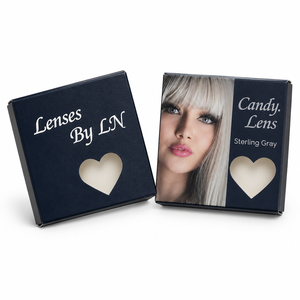 Packaging Box
Custom Colored Lens Outer Packaging Boxes with Heart Window and Portrait Printing
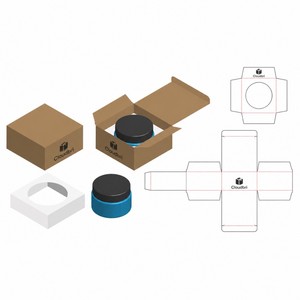 Paper Packaging
Love Window Design Lens Contacts Colored Eye Contact Lenses Wholesale Paper Box
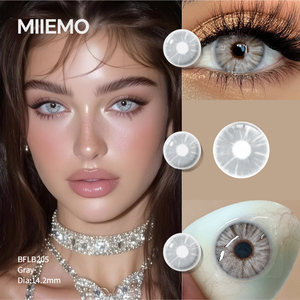 Half-Year Wear
DSC Factory Half Year Disposable Soft HEMA Three Tone ISO 13485 Korean Style Lenses
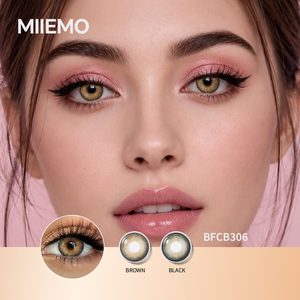 Factory Direct OEM
DSC High-Performance Brown Soft Contact Lenses Half Year Color ISO 13485 Direct
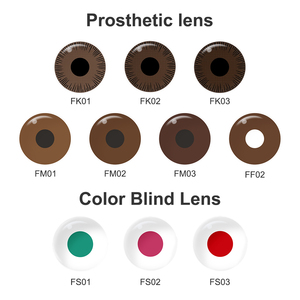 Medical Prosthetic
Pseyeche Brown Prosthetic Contact Lenses for Blind Eye Cosmetic Defect Occlusion
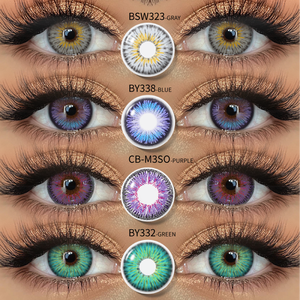 Theatrical Series
2025 Crazy Cosplay Anime Halloween Soft Colored Contact Lenses Party Series
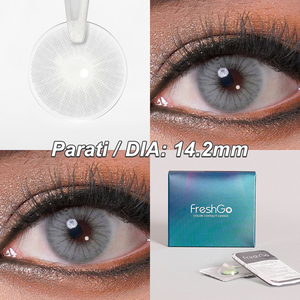 Natural Yearly
Freshgo Natural Contact Lens RIO Series Custom Soft Yearly Cosmetic Contacts
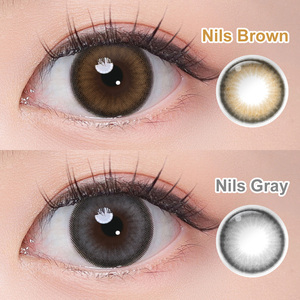 Flagship Series
Magister New NILS Contact Wholesale Brown Color Lenses Soft Cosmetic Contacts
Direct Manufacturing Heritage: From Cleanroom Engineering to Global Portfolios
Why navigating medical device procurement requires true factory infrastructure rather than intermediary broker networks.
In the highly regulated optical and ophthalmic beauty sphere, establishing a brand demands uncompromising safety, batch uniformity, and deep biomedical validation. With over 42 years of precision vision care heritage dating back to 1984, our family group pioneered modern contact lens synthesis starting with the inception of Gansu Constar Technology Group. This operational foundation was strengthened by significant infrastructure expansions through the Hunan Liangguo Group, anchored by the state-of-the-art Hunan Haipuming Technology manufacturing complex.
Serving as the direct global international marketing, engineering, and compliance headquarters for these combined industrial facilities, Eyebeauty Technology Co., Ltd. operates not as a broker or third-party sourcing agent, but as the unified factory gateway for international optical brands, clinic networks, and premier beauty distributors. When brand owners partner with our facilities, every lens—from raw monomer synthesis to sterile blister thermal sealing—originates within controlled cleanrooms conforming to the strictest global medical device directives.
Certified Conformity
Full CE (MDR EU 2017/745) compliance, certified ISO 13485:2016 quality management systems, and active US FDA facility establishment registration (FEI: 3015587162).
15,000+ Design Library
In-house trend engineering studio generating 100+ new color concepts annually. Seamless access to proven retail lines including MILLCREEK, KSSEYE, Haipurecon, and DUOXIU.
MFDS Regulatory Handshake
Exhaustive technical dossier compilation tailored for South Korea MFDS Class II/III approvals, Japanese PMDA dossiers, and ASEAN Medical Device Directive frameworks.
Turnkey Private Label
Complete custom primary foil sealing, borosilicate sterile vial capping, custom bilingual packaging boxes with localized compliance labeling, and flexible MOQs.
Our dual-facility architecture allows clear strategic division between mass-scale high-speed cast molding lines and high-complexity artistic hand-cast or prosthetic configurations. With Gansu Constar focusing on foundational hydrogel stability and automated high-throughput production, and Hunan Haipuming (Liangguo Group) dedicated to specialized cosmetic color layering, UV-blocking infusion, and advanced silicone hydrogel formulations, our B2B partners enjoy direct, uncompromised factory cost advantages alongside industrial delivery guarantees.
Advanced Contact Lens Technology: Biocompatibility, Micro-Encapsulation & Edge Geometry
Examining how modern polymer matrices and multi-layer pigment embedding elevate ocular health and cosmetic color brilliance.
Cosmetic and corrective contact lenses operate at the delicate intersection of visual optics and corneal physiology. Unlike standard clear corrective optics, color contact lenses introduce inorganic pigment formulations (such as iron oxides, titanium dioxides, and phthalocyanine blue) that must remain entirely sequestered from ocular tissue. Historical lathe-cut or surface-printed lenses presented documented risks of micro-pigment exposure, rough anterior surfaces, and elevated bacterial adherence.
At our cleanroom facilities, we enforce proprietary Three-Layer Sandwich Encapsulation Technology. Utilizing high-precision cast molding, non-toxic biocompatible colorants are locked permanently between two hydrophilic protective polymer layers. The colored stratum never touches the delicate corneal epithelium or the palpebral conjunctiva, preserving optical smoothness, tear-film dynamics, and high lubricity throughout prolonged wear cycles.
Polymer Formulations: Hydrogel vs. Silicone Hydrogel Matrix
Selecting the optimal core material is pivotal when developing private label portfolios. Our research and development laboratories maintain extensive material master files across multiple polymer classifications:
| Polymer Classification | Material Designation | Water Content (%) | Dk/t (Oxygen Transmissibility) | Primary Clinical Application | Production Modality |
|---|---|---|---|---|---|
| Traditional Hydrogel | Poly-HEMA / NVP Copolymer | 38% – 42% | 18 – 24 × 10-9 | Cosmetic Daily / Monthly / Yearly Lenses | Fully Automated Cast Mold |
| High-Water Hydrogel | Etafilcon A / Methafilcon | 55% – 58% | 28 – 33 × 10-9 | Comfort Daily Disposables (1-Day) | Micro-Injection Cast Mold |
| Silicone Hydrogel (SiHy) | Filcon V / Fluoro-Siloxane | 45% – 48% | 85 – 120 × 10-9 | Extended Wear & High-Oxygen Health Series | Dual-Cure Photopolymerization |
| Prosthetic Occlusion | High-Density Crosslinked HEMA | 38% – 40% | 15 – 20 × 10-9 | Corneal Scarring / Iris Trauma / Aniridia | Hand-Crafted Lathe & Mold |
Edge Profile Geometries and Moisture Retention Technologies
Beyond material matrices, wearing comfort depends on edge geometry. Our molds utilize Smooth-Tapered Beveled Edges that align with the peripheral scleral curvature. This ultra-thin margin encourages continuous tear exchange beneath the lens body during involuntary blinking, actively washing away metabolic debris and reducing conjunctival staining. Furthermore, our formulations integrate internal wetting agents—including sodium hyaluronate (HA) and 2-Methacryloyloxyethyl Phosphorylcholine (MPC)—into the monomer blend, inhibiting proteinaceous tear deposition and preserving surface wettability across the entire replacement life cycle.
Strategic Sourcing Insights: Global Procurement & Aesthetic Trends for 2026–2030
Actionable intelligence for optical buyers, brand strategists, and importers planning next-generation color lens product roadmaps.
The global cosmetic and corrective contact lens sector is shifting toward increased single-use hygiene, hyper-natural chromatic blending, and heightened regulatory accountability. Brand owners who adjust procurement cycles to accommodate these market dynamics build defensible market positions.
The Shift to Daily Disposables (1-Day)
While 6-month and yearly replacement cycles remain high-margin staples across Latin America, the Middle East, and parts of Europe, leading Asian and North American markets are decisively migrating toward daily single-use colored lenses. Wholesalers are expanding automated blister strip lines that lower per-pack manufacturing costs.
K-Beauty Naturalist & Highlight Patterns
Opaque, high-contrast cosmetic lenses are giving way to subtle, translucent iris designs. Micro-dot printing, watercolor edge gradations, light-reflecting crescent highlight arcs, and natural ash/olive limbal rings dominate retail channels, requiring sub-micron digital plate imaging during factory mold tooling.
Tightening Regulatory Landscapes
Regional authorities—from the European Union under MDR (EU 2017/745) to the Korean MFDS, Saudi SFDA, and Brazilian ANVISA—have eliminated grey-market importation channels. Professional B2B buyers must partner exclusively with manufacturers whose technical files, biocompatibility data (ISO 10993), and clinical evaluations are fully current.
Eco-Responsible Packaging & Automation
Retail optical stores demand sustainable packaging footprints. Forward-thinking procurement plans feature reduced-plastic PP blister cups, recyclable aluminum foil membranes, and FSC-certified paper boxes printed with non-toxic, soy-based inks to satisfy regional corporate sustainability directives.
Digital Omnichannel & Agile Batching
Emerging DTC brands and optical retail chains require fast SKU turnarounds. Our factories support flexible baseline runs and rapid inventory replenishment, enabling brands to test 15 to 20 seasonal color patterns without tying up capital in excessive dead inventory.
High-Definition Astigmatic (Toric) Colors
Historically limited to spherical corrections, the market for custom toric colored contact lenses is experiencing unprecedented compound annual growth. Combining prismatic ballast stabilization with multi-tone cosmetic ink matrices represents a primary commercial growth channel for high-end optical buyers.
Navigating the OEM/ODM Workflow: From Graphic Conception to Market Clearance
A transparent view into our end-to-end cleanroom project lifecycle for private label brand realization.
Creating a differentiated color lens line demands meticulous design alignment, optical calculation, packaging engineering, and medical compliance. Eyebeauty streamlines this operational roadmap through an integrated six-stage manufacturing protocol:
1. Aesthetic Conception & Color Formulation: Brands provide graphic concepts, target reference photography, or Pantone chromatic numbers. Our specialized color laboratory formulates inorganic pigment ratios and determines the ideal dot-matrix spread, pupil opening radius (typically 3.8mm to 4.5mm), and graphic diameter (GDIA 13.0mm to 13.8mm against total DIA 14.0mm to 14.5mm).
2. Tooling, Steel Insert Machining & Test Castings: High-precision CNC lathe machines craft nickel-copper or stainless steel optical inserts with sub-nanometer surface smoothness. Test batches are cast in our ISO 13485 cleanroom facilities to verify base curve repeatability (BC 8.5mm to 8.7mm) and center thickness (typically 0.08mm @ -3.00D).
3. Blister & Vial Primary Packaging Customization: Clients choose their sterile containment system: medical-grade PP blister packs heat-sealed with multi-ply foil lids, or borosilicate type-I medical vials with flip-off tear aluminum crimp caps. Primary packaging can be imprinted with brand typography, lot tracking, expiry serialization, and diopter matrices.
4. Secondary Packaging & Regulatory Label Engineering: We engineer outer retail cartons, display folding units, and multi-lens retail presentation boxes (such as our heart-window packaging and premium love-window retail formats). All text layouts are harmonized with destination-market medical device labeling requirements, including UDI (Unique Device Identifier) barcoding, CE body designations, and localized language leaflets.
5. High-Pressure Steam Autoclave Sterilization: Finished sealed packages undergo validated terminal sterilization inside digital pressurized steam autoclaves (conforming to EN 556 and ISO 17665). Each lot must pass biological indicator challenges and 14-day sterility incubation protocols before quarantine release.
6. Quality Assurance Quarantine & Export Logistics: Physical, chemical, and microbiological batch inspection certificates (COA) are issued for every production batch. Shipments are consolidated with complete packing lists, commercial invoices, certificates of origin, and custom declarations for rapid air or sea clearance to world ports.
Frequently Asked Questions for B2B Contact Lens Buyers
Direct answers to the most common technical, regulatory, and logistical questions encountered when evaluating OEM factories.
For our in-stock catalogue designs (with over 1,500 active formulations across MILLCREEK, KSSEYE, and partner brands), MOQs start as low as 50 to 100 pairs per SKU for private label packaging. For fully bespoke color creations requiring custom pad printing plates or specialized cast mold tooling, typical production runs start at 500 to 1,000 pairs per shade across standard diopter matrices.
All cosmetic lenses manufactured across our Gansu Constar and Hunan Haipuming cleanrooms utilize proprietary Three-Layer Sandwich Encapsulation. Color pigments are chemically locked inside a polymer sandwich; outer surfaces are 100% pure biocompatible hydrogel. We perform extensive ISO 10993 cytotoxicity, ocular irritation, and extraction testing to confirm zero pigment exposure.
Yes. While the local importer or brand owner holds the market approval in their respective territory, Eyebeauty supplies the comprehensive manufacturer-side technical dossier. This includes ISO 13485:2016 certificates, CE (MDR) certifications, FDA FEI verification (FEI: 3015587162), raw material biocompatibility dossiers, sterilization validation reports, and real-time accelerated shelf-life stability data.
Our standard casting lines support plano powers (0.00D for purely cosmetic wear) as well as corrective myopia prescriptions ranging from -0.50D to -6.00D (in 0.25D increments) and from -6.50D to -10.00D (in 0.50D increments). Hyperopia (+0.50D to +4.00D) and customized astigmatic toric configurations are available via customized cast mold programs.
Catalogue in-stock items with custom foil or outer carton overprinting typically dispatch within 7 to 14 business days. Fully custom OEM production runs—including custom packaging box fabrication, automated blister sealing, autoclave terminal sterilization, and 14-day microbiology incubation clearance—typically require 25 to 35 business days from final digital artwork proof approval.
We offer both medical-grade polypropylene (PP) blister strips (packaged in 1-piece, 2-piece, 10-piece, or 30-piece formats) and classic 5ml/10ml borosilicate glass vials with sterile butyl rubber stoppers and aluminum tear-off seals. Blister strips are preferred for modern retail optical chains and 1-day/monthly lines, while vials remain popular for multi-month or annual lenses.
Our turnkey service includes complete carton engineering. Clients can select from embossed paper boxes, die-cut window designs (such as our love-window and heart-window retail boxes), holographic anti-counterfeiting hot-stamps, and custom instructional leaflets printed in any language with full local regulatory compliance markings.
Yes. We regularly supply sample evaluation kits containing representative lens colors, base curves, and packaging configurations to qualified optical distributors, private label brand developers, and ophthalmology clinics. Contact our trade desk to review sample portfolios matching your regional target specifications.
Accelerate Your Brand's Growth with a Verified OEM Factory Partner
Whether you are developing a new cosmetic collection for Korean retail optical chains, engineering prescription color daily disposables for European distribution, or launching a global private label brand, Eyebeauty delivers direct factory pricing, certified cleanroom precision, and comprehensive regulatory documentation.