42+
Years Manufacturing Experience (Est. 1984)
15,000+
Proprietary Color & Pattern SKUs
126+
Export Countries & Regions
100%
CE (MDR) & ISO 13485 Certified
Wholesale Catalog & Custom Lines
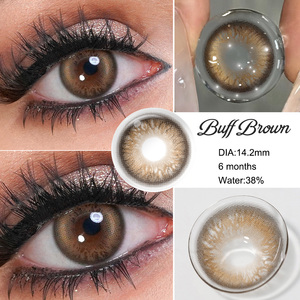
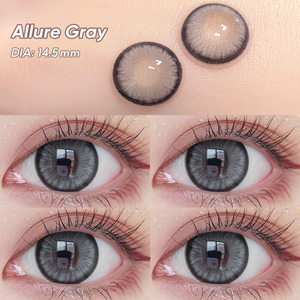
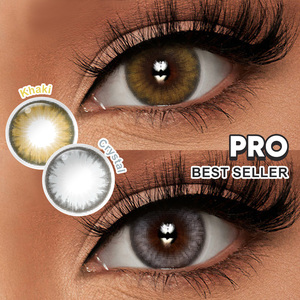
Featured OEM Contact Lenses & Optical Consumables
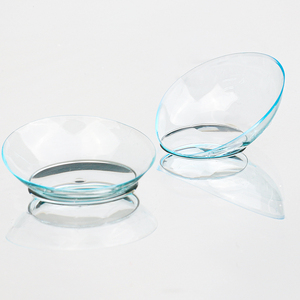
Discover precision-cast prescription lenses, cosmetic colored matrices, and automated assembly solutions manufactured to international pharmacopeia standards.
Manufacturing Capabilities
Why Global Brands Partner with Eyebeauty Technology
From our legacy manufacturing roots in 1984 with Gansu Constar Technology Group to precision soft-lens cleanrooms under Hunan Liangguo Group (Hunan Haipuming Technology), we eliminate intermediary trading risks through vertically owned production facilities.
Dual Medical Certifications
Manufactured strictly compliant with EU CE (MDR 2017/745), ISO 13485:2016 quality architecture, and direct US FDA establishment registration (FEI: 3015587162).
Proprietary Color Sandwiches
Our micro-encapsulation sandwich technology permanently seals biocompatible colorants between clear hydrogel layers, guaranteeing zero pigment migration into corneal tissues.
Full Cycle Contract Turnkey
Comprehensive private label engineering spanning packaging design, foil blister sealing, automated sterile filling, barcoding, and MFDS/KFDA technical dossier formulation.
Agile Pilot-to-Scale Supply
Low MOQ introductory trial runs for emerging direct-to-consumer and optical chains, backed by a buffer warehouse of 1,500+ immediate-dispatch styles in 7-10 days.
Industry Whitepaper & Strategic Sourcing
The Engineering & Strategic Procurement Architecture for OEM Contact Lenses
A deep dive into polymer science, regulatory compliance pathways, and market dynamics shaping the modern contact lens supply chain.
1. Advanced Polymer Formulations: The Transition from Traditional Hydrogels to Next-Gen Silicone Hydrogels
Modern ophthalmic procurement requires a meticulous understanding of material composition. Historically, standard hydrogel contact lenses based on 2-hydroxyethyl methacrylate (poly-HEMA) offered exceptional water retention and instantaneous on-eye wettability. However, their inherent physiological limitation lies in oxygen transmissibility (Dk/t barrier), which typically peaks below 30 Barrer/cm for standard thicknesses. At Eyebeauty Technology's manufacturing hubs, including the Gansu Constar facility established in 1984 and modern cleanrooms at Hunan Haipuming Technology, advanced polymer engineering incorporates fluoro-silicone macromers.
By creating continuous fluorosilicone domains within the crosslinked polymer matrix, our third-generation silicone hydrogel variants achieve Dk/t values exceeding 85 Barrer/cm while maintaining a low modulus (0.45 to 0.60 MPa). This strikes an ideal equilibrium between corneal hypoxia prevention, tear film exchange, and mechanical softness—ensuring sustained ocular comfort during long 14-hour daily wear cycles.
2. Ophthalmic Pigmentation Technology: Micro-Encapsulation vs. Surface Printing
In cosmetic and colored lens manufacturing, safety is fundamentally governed by the application method of biocompatible color pigments (such as iron oxides, copper phthalocyanine, and titanium dioxide). Conventional, low-cost manufacturers often apply pad printing directly onto the cured optical surface, which poses substantial risks of pigment leaching, conjunctival micro-abrasions, and bacterial colonization.
Eyebeauty enforces a Dual-Layer Sandwich Matrix Encapsulation protocol. In this process, the color layer is printed onto a partially polymerized hydrophilic precursor monomer layer, followed by a secondary injection and UV photopolymerization of a sterile optical shield. The pigment is physically locked within the lens core, rendering it completely inaccessible to the palpebral conjunctiva and corneal epithelium. This precision technology ensures complete biocompatibility in accordance with ISO 10993-1 cytocompatibility and ocular irritation assays.
| Manufacturing Parameter | Standard Hydrogel (2-HEMA) | Silicone Hydrogel (SiHy) | Sandwich Encapsulated Color |
|---|---|---|---|
| Oxygen Permeability (Dk) | 18 – 28 Barrers | 80 – 140 Barrers | 22 – 45 Barrers |
| Water Content (%) | 38% – 58% | 38% – 48% | 40% – 55% |
| Elastic Modulus (MPa) | 0.30 – 0.50 | 0.45 – 0.85 | 0.40 – 0.60 |
| Primary Target Market | Cosmetic Wear, Daily Value | Extended Wear, Clinical Therapy | Beauty Fashion, K-Beauty Trends |
| Sterilization Method | Moist Heat Autoclave (121°C) | Moist Heat Autoclave (121°C) | Cycle Validated Steam Autoclave |
3. Strategic Procurement Evolution: Sourcing Trajectories for 2026–2030
B2B procurement dynamics across North America, Europe, and Asia-Pacific (notably the rigorous South Korean optical market overseen by the Ministry of Food and Drug Safety) demonstrate clear structural transformations:
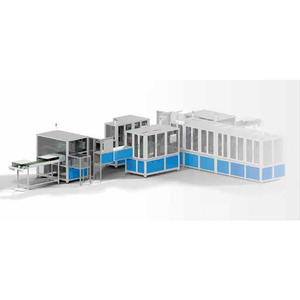
A. Rapid Rise of Daily Disposable (1-Day) Dominance: Driven by consumer hygiene priorities, daily single-use units now represent over 60% of procurement investments by optical retail chains. OEM programs increasingly prioritize high-speed packaging lines like our automated blow-fill-seal blister tooling, minimizing per-unit packaging material overhead while optimizing aseptic seal integrity.
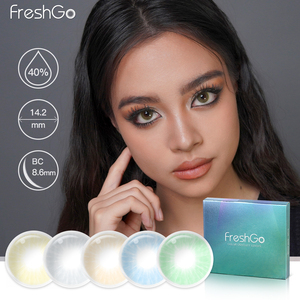
B. Convergence of Visual Optics with K-Beauty Aesthetic Dynamics: Color contact lenses are no longer merely medical correction devices; they are primary makeup cosmetics. Micro-diameter limbal patterns (14.0 mm to 14.2 mm) featuring soft ash gradients, glow-tint highlights, and dimensional depth mapping drive market expansion. Brand owners require rapid-turnaround ODM design partners capable of transforming runway palette concepts into finished ISO-compliant SKUs in weeks, not quarters.
C. Stringent Regulatory Due Diligence & Traceability: The enforcement of the EU Medical Device Regulation (MDR 2017/745) and rigorous foreign manufacturing audits by health authorities have rendered uncertified suppliers unviable. Successful procurement teams now focus heavily on verifiable technical files, factory master records, cleanroom bioburden records, and unified lot-number traceability from polymer resins to distribution boxes.
Future Horizons
Technological Innovations Reshaping Contact Lens Manufacturing
Our R&D engineering divisions are actively deploying breakthrough innovations to support client lines over the coming decade.
Active UV/HEV Blue-Light Filtering
Integration of selective nano-absorbers directly into the crosslinked hydrogel polymer to block 99% of UV-A/UV-B and attenuate high-energy visible (HEV) blue wavelength spectra emitted by digital displays without distorting ambient color perception.
Sustainable Bio-Derived Polymers
Pioneering renewable, carbon-neutral matrix building blocks and fully recyclable polypropylene blister packaging designed to decrease environmental plastic loads in high-volume single-use daily contact lens segments.
Therapeutic Matrix Infusion
Advanced polymer micro-cavity research enabling continuous, passive diffusion of ophthalmic moisture stabilizers like hyaluronic acid (HA) into tear films to mitigate dry-eye symptoms throughout contact lens wear.
Procurement Guidance
Frequently Asked Questions for Custom OEM Sourcing
Clear, authoritative technical answers addressing common questions from optical brand directors, compliance managers, and supply chain heads.
What is the typical Minimum Order Quantity (MOQ) and production turnaround for custom OEM brand lines?
Our flexible manufacturing setup accommodates both emerging brands and large-scale retailers. For ready-to-ship catalog patterns under customized blister/box private labels, MOQs begin at just 500 to 1,000 pairs, with lead times of 7 to 15 business days. For fully custom color pattern formulations, custom cast tooling, or specialized diopter parameters, custom production runs typically require 5,000 to 10,000 units per color design, with a manufacturing lead time of approximately 30 to 45 calendar days following pilot batch sign-off.
What regulatory documentation does Eyebeauty provide to support local health ministry registrations (e.g., MFDS, US FDA, CE)?
Because contact lenses are classified as Class II or Class III medical devices depending on regional jurisdictions, we furnish comprehensive regulatory technical packages. This includes our ISO 13485:2016 quality management certificates, European CE (MDR) certifications, US FDA facility establishment registrations (FEI: 3015587162), chemical characterization studies, accelerated 3-to-5 year aging stability test reports, biological safety evaluation data (ISO 10993 series), and validated terminal autoclave sterilization cycle dossiers required for domestic import approvals (such as South Korean MFDS filings).
How do you guarantee color batch-to-batch consistency across high-volume production cycles?
Color consistency is strictly maintained through automated computer-controlled dispensing systems linked to calibrated spectrophotometers. Each pigment formulation is blended to strict Pantone and Delta-E tolerances (Delta-E < 0.8). Furthermore, our cleanroom lines integrate 100% automated high-resolution AOI (Automated Optical Inspection) systems, which verify chromatic density, dot distribution, pupil aperture centering, and edge concentricity across every cured contact lens blister.
Can we supply our own bespoke graphic packaging, blister foil prints, and custom outer carton configurations?
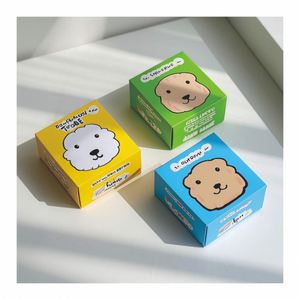
Yes. Our turnkey private label services cover every packaging touchpoint. We provide detailed dieline vectors for standard 1-pack, 2-pack, 10-pack, and 30-pack folding cartons, as well as aluminum peel-foil dimensions. We print with medical-grade, alcohol-resistant inks to ensure compliance with international labeling standards, including lot serialization, GS1 DataMatrix 2D barcodes, expiry tracking, diopter identification, and multi-language consumer safety inserts.
What base curves (BC), diameters (DIA), and prescription power ranges are available under OEM agreements?
Our cast-molding tool libraries support standard universal Base Curves of 8.5 mm and 8.6 mm, alongside custom radii from 8.4 mm to 8.8 mm upon request. Standard overall diameters range from 14.0 mm to 14.5 mm (with custom graphic diameters configured from 13.0 mm to 13.8 mm). In terms of optical corrective power, our lines produce plano (0.00 diopters) for cosmetic wear, down through -0.50D to -10.00D for spherical myopia correction, with customized toric cylinder ranges available for custom contract manufacturing runs.
Accelerate Your Brand's Launch with a True Medical-Grade Manufacturer
Contact our technical engineering and international accounts team today to discuss bespoke formulation requirements, request certified sample sets, or receive a fast, tailored volume quotation.