Yearly Disposable
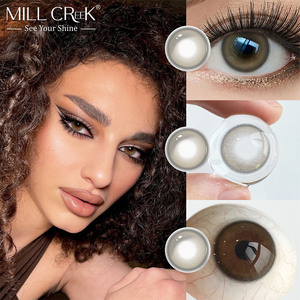
Natural Colored Contact Lenses 14.2mm 14.5mm 4 Soft Shades Yearly Disposable Wholesale
Product Details & Quote
Source high-definition cosmetic and refractive soft lenses directly from CE (MDR) and ISO 13485 accredited cleanrooms. Tested across 15,000+ commercial design patterns.
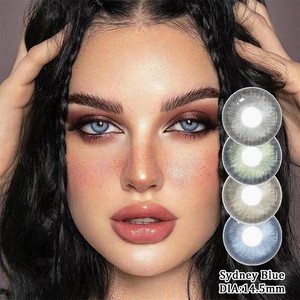
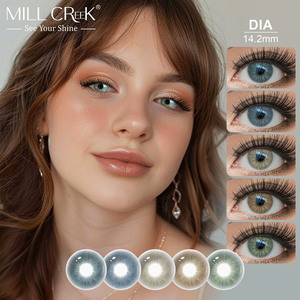
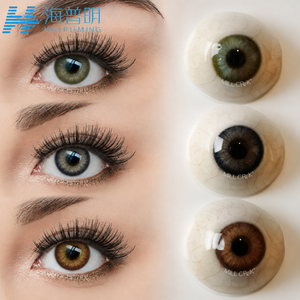
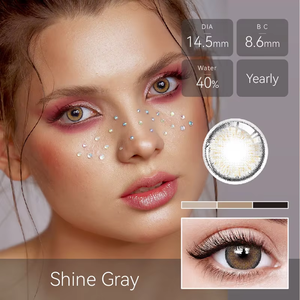
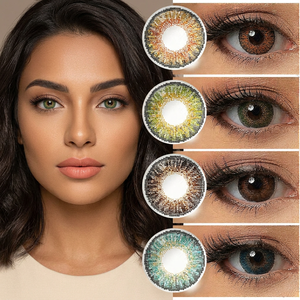
Navigating the global contact lens supply chain requires deep technical literacy across ophthalmic polymer engineering, Class III medical device regulatory frameworks, and visual optics. Eyebeauty Technology Co., Ltd. serves as the premier international interface of our family manufacturing legacy, comprising Gansu Constar Technology Group (founded in 1984) and Hunan Haipuming Technology (Liangguo Group). Unlike sourcing brokers or trading companies, we operate wholly owned cleanroom production facilities delivering end-to-end traceability from monomer synthesis to sealed blister packaging.
The foundation of clinical safety and tactile comfort in soft contact lenses is biomaterial compatibility. Hydrophilic poly-2-hydroxyethyl methacrylate (PolyHEMA) remains an industry benchmark for ocular tolerance. By incorporating N-Vinylpyrrolidone (NVP) into the monomer backbone, our polymer formulations increase equilibrium water content (EWC) up to 40%–42% without sacrificing dimensional tensile strength. For high-d/k formulations, our specialized casting lines integrate fluoro-silicone macromers that bypass traditional water-phase oxygen transport limitations, facilitating corneal aerobic metabolism through direct oxygen permeability across extended wearing periods.
| Polymer Formulation | Equilibrium Water Content | Oxygen Permeability (Dk/t) | Modulus (MPa) | Target Clinical Segment |
|---|---|---|---|---|
| Standard PolyHEMA | 38% – 40% | 12 – 15 | 0.35 – 0.42 | Cosmetic Daily/Monthly Wear, Stable Micro-pigmentation |
| HEMA + NVP Copolymer | 42% – 45% | 18 – 22 | 0.30 – 0.38 | Sensitive Ocular Surface, K-Beauty Glow & Highlight Tones |
| Silicone Hydrogel (SiHy) | 45% – 55% | 85 – 120 | 0.50 – 0.68 | Extended Wear Refractive Optics & Therapeutic Formats |
| HEMA-Glycerol Monomer | 55% – 58% | 25 – 30 | 0.28 – 0.34 | Ultra-Moisture Daily Disposable Single-Use Lenses |
Direct surface printing of cosmetic pigments poses significant corneal health risks, including micro-abrasions and cellular cytotoxicity caused by dye leaching. Eyebeauty factories strictly deploy a proprietary multi-layer sandwich mold casting process. Non-toxic, pharmaceutical-grade iron oxide, titanium dioxide, and phthalocyanine pigments are embedded completely inside an isolated central hydrogel pocket. Both the anterior and posterior surface layers consist of pure, uncolored optical biomaterial. This design guarantees zero direct pigment contact with the palpebral conjunctiva or corneal epithelium, exceeding ISO 10993 cytotoxicity and ocular irritation safety thresholds.
Contact lenses are classified as Class IIb or Class III medical devices across leading jurisdictions. Eyebeauty’s manufacturing infrastructure operates under stringent compliance systems:
Direct contract manufacturing backed by private ownership, in-house mold engineering, and dedicated OEM/ODM project management.
Four decades of continuous ocular lens production through Gansu Constar Technology Group and Hunan Liangguo Group. Complete ownership of extrusion, casting, lathe-cutting, and automated blister packaging machinery eliminates trading markups.
Unlike third-party packagers, we engineer precision injection mold cavities in-house. This enables ultra-tight edge profile geometry (feather-edge contouring) to reduce eyelid margin interaction and minimize conjunctival hyperemia.
Our proprietary house brands—including MILLCREEK, KSSEYE, Haipurecon, and DUOXIU—distribute globally across 126 nations, confirming the retail appeal and clinical performance of our core lens formulations in competitive consumer spaces.
Access over 1,500 active, pre-certified stock items dispatchable within 7 to 10 business days. For customized private label OEM orders, our CAD tinting studios generate rapid pre-production prototypes within 14 business days.
Our dedicated regulatory and technical team delivers localized packaging compliance, including bilingual Korean MFDS labeling, European MDR labeling symbols (ISO 15223-1), and GS1-compliant DataMatrix UDI barcoding integration.
Strategic analysis of consumer demand vectors, biomaterial innovations, and supply chain shifts in the international contact lens landscape.
While yearly and 6-month cycles maintain strong economic demand in emerging markets, European, North American, and East Asian optical chains are rapidly shifting purchase orders toward daily disposables. Brand owners must balance unit-cost dynamics with hygienic value propositions, requiring automated blister packaging machines capable of handling millions of units monthly.
Historically, cosmetic colored contact lenses were limited to spherical plano or low-minus powers. The modern private label market requires toric color lenses featuring prism-ballast or peri-ballast stability zones, serving astigmatic consumers who refuse to compromise between cosmetic eye enhancement and crisp visual acuity.
Generic solid-color circles are being supplanted by K-Beauty-inspired asymmetrical highlight designs, moon-crescent arcs, and layered 3-tone micro-dot gradients. These patterns mimic natural stromal architecture, providing subtle iris depth that blends seamlessly across dark Asian irises as well as light Caucasian eye colors.
With tightening environmental mandates in the European Union and North America, buyers are prioritizing factories that optimize blister cavity volume. Decreasing secondary blister polypropylene weight by up to 25% directly reduces carbon tax footprints while streamlining global airfreight volume costs.
Strict retail regulations in markets like South Korea, Japan, and the United States mandate clear supply chain verification. Leading private label operators are sourcing from audited facilities equipped with Individual Unit Identification (UDI) to allow legitimate electronic prescribing, optical store pickups, and licensed distributor verification.
Actionable answers addressing production minimums, custom box packaging, regulatory documentation, and quality verification.