Bestseller OEM
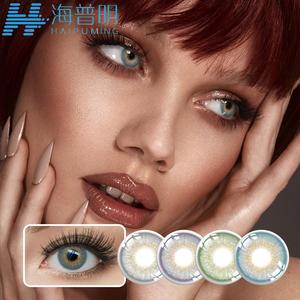
Manufactured in GMP-compliant class 100,000 cleanrooms using state-of-the-art cast-molding and Sandwich pigment-locking technology.

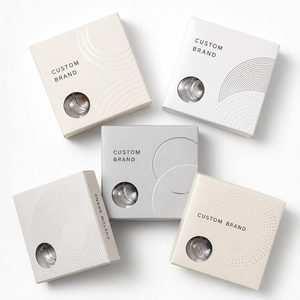
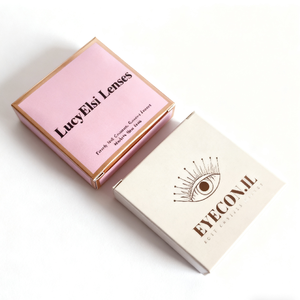
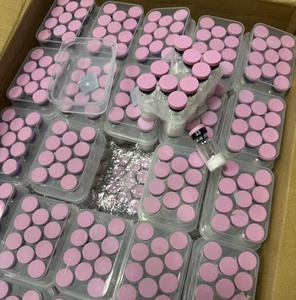
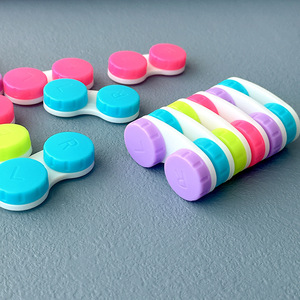
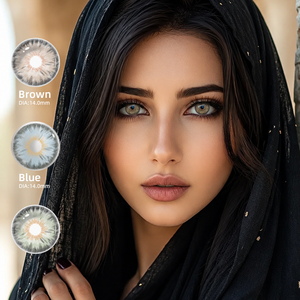
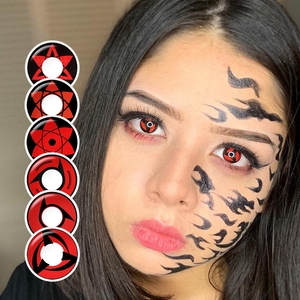
We bridge the gap between high-capacity Chinese manufacturing powerhouses and sophisticated global regulatory scrutiny.
Operating dual manufacturing flagships: Gansu Constar Technology Group (operating since 1984) and Hunan Haipuming Technology (Liangguo Group), boasting automated cleanrooms and sterile casting lines.
Complete CE (MDR) certifications, ISO 13485:2016 quality management, US FDA Establishment Registration (FEI: 3015587162), and dedicated technical files ready for Korean MFDS dossiers.
Over 1,500+ standard and fashion SKUs stocked in ready-to-ship warehouses. Standard dispatch in 7–10 days, accelerating inventory turnover and seasonal trial efficiency for private-label importers.
From monomer polymerization and computerized mold lathing to custom outer luxury paper packaging, folding cartons, and eye repair peptides—our supply chain eliminates intermediary overhead.
The global contact lens market is undergoing an unprecedented structural transition. Formerly split strictly between corrective clinical prosthetics and novelty cosmetics, the current landscape demands hybrid convergence: bio-compatible materials delivering ophthalmic precision paired with sophisticated cosmetic aesthetic design. For procurement directors, category managers, and private-label brand founders, selecting a China-based wholesale contact lens factory is no longer solely a matter of unit cost; it is an evaluation of biophysical safety standards, polymer engineering, and regulatory agility.
Historically, traditional Poly-HEMA (Hydroxyethyl methacrylate) materials dominated China's wholesale contact lens exports due to their predictable casting stability and cost effectiveness. However, high-volume consumer markets across the United States, Europe, and East Asia are aggressively shifting requirements toward enhanced oxygen permeability ($Dk/t$).
Our manufacturing facilities implement high-purity siloxane macromers combined with hydrophilic monomers, dramatically elevating trans-corneal oxygen flux ($Dk/t > 80 \times 10^{-9}$) while maintaining a supple modulus (0.4–0.6 MPa). This prevents hypoxia-induced corneal edema during prolonged wearing sessions. Concurrently, for cosmetic daily disposables, our optimized ionic and non-ionic HEMA formulations preserve a stable 40%–58% water content envelope, resisting lipid and protein deposits even in arid, air-conditioned urban environments.
Clinical Manufacturing Note: All Eyebeauty colored lenses employ Full-Sandwich Encapsulation Technology. Biocompatible color pigments are locked safely between micro-layers of clear polymer, guaranteeing that reactive color pigments never make physical contact with the corneal epithelium or palpebral conjunctiva.
To assist B2B procurement teams in qualifying technical dossiers, the following benchmark defines our key factory-standard production matrix:
| Parameter / Metric | HEMA Premium Series | Silicone Hydrogel (SiHy) Series | Quality Verification Standard |
|---|---|---|---|
| Water Content | 40% – 42% ± 2% | 45% – 55% ± 2% | ISO 18369-4 Gravimetric / Refractometry |
| Oxygen Transmissibility ($Dk/t$) | $15 - 22 \times 10^{-9}$ | $85 - 120 \times 10^{-9}$ | Fatt (Polarographic) Method |
| Base Curve (BC) | 8.50mm / 8.60mm ± 0.05 | 8.60mm / 8.70mm ± 0.05 | Non-contact Optical Coherence Profilometry |
| Diameter (DIA) | 14.0mm to 14.5mm | 14.0mm to 14.2mm | Image Projection Measurement System |
| Center Thickness (CT) | 0.07mm – 0.08mm (@ -3.00D) | 0.06mm – 0.08mm (@ -3.00D) | Ultrasonic Thickness Gauging |
| Power Range (Diopters) | 0.00 to -10.00D (0.25D / 0.50D steps) | 0.00 to -12.00D (Toric available) | Automated Lensmeter ISO 18369-3 |
| Color Micro-Encapsulation | Dual-Layer Cast Sandwich | 3D Polymer Fusion Immersion | Zero pigment rub-off test (Cotton swab/solvent) |
B2B buyers operating in the fast-moving optical retail industry must align their inventory roadmaps with three macro market evolutions:
A. The Rise of Daily Disposables (1-Day Replacements): Driven by elevated public health awareness and the convenience culture of Gen-Z consumers, the market share of annual and semi-annual lenses is rapidly contracting in tier-1 markets, ceding ground to daily disposable blisters. Importers seeking strong commercial lifetime value (LTV) are shifting capital toward automated daily blister lines.
B. Photorealistic and "No-Makeup" K-Beauty Asthetics: The demand for heavy, opaque 3-tone rings is transitioning toward hyper-natural visual depth: subtle limbal blurring, micro-highlight speckling, and iris-enhancing pupil fades. Brands that partner with factories capable of high-precision dot-matrix printing gain immediate conversion advantages across omnichannel retail.
C. Integrated Eye-Care Ecosystems: Optical brands are no longer merely marketing plastic lenses. They are bundling private-label sterile accessories, customized eco-friendly paperboard unboxing sets, and ocular surface repair solutions (such as active peptide serums and preservative-free wetting agents). Eyebeauty supplies this entire value stream under one contract.
Everything you need to know about factory MOQs, regulatory documentation, private labeling, and quality audits.
Direct access to China's foremost medical-grade contact lens factories. Connect directly with our enterprise engineering and B2B export consultation desk.
Send an Inquiry