42+
Years Manufacturing Heritage (Since 1984)
15,000+
Proprietary Color Formulations & Patterns
126+
Destination Countries Routinely Cleared
10,000+
B2B Optical Distributors & Brands Supplied
Wholesale Inventory & Custom Lines
Featured OEM/ODM Production Series & Wholesale Inventory
Explore high-velocity SKUs engineered in cleanroom facilities. Available across flexible replacement intervals—from daily disposables to yearly vials—customizable for Korean optical chains and international private labels.
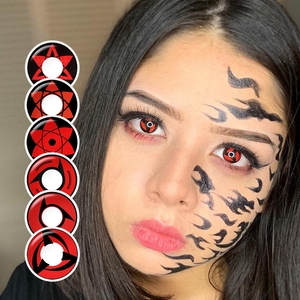
Free Shipping Anime Contact Lenses Cosplay Colored Contacts Halloween Eye Lens Colored Eye Contacts Lentes De Contacto
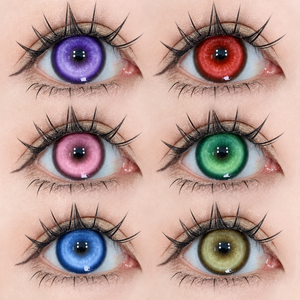
Cosplay 14.5mm Soft Hardness Halloween Colored Contact Lenses Crazy Circle Blue White Silver Design High Quality for Halloween
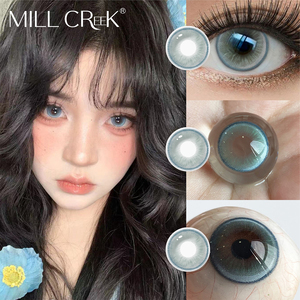
Haipurecon Very Cheap Eye Contact Lenses Soft Circle Cosmetic Color Contact Lens 1 Year Color Lens
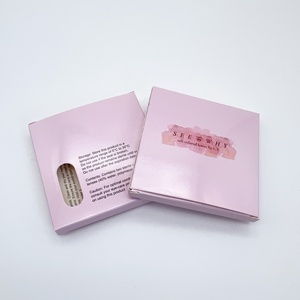
Hot Sale Custom Design Logo Contact Lenses Cardboard Paper Cosmetic Boxes with Window Makeup Packaging
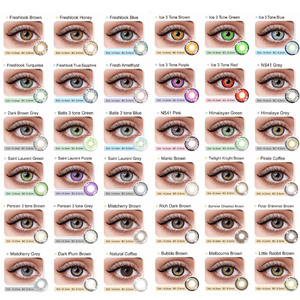
Haipurecon Factory Direct Wholesale Contact Lenses $0.99 Per Pair MOQ 500 Pairs Limited Stock Contact for Deal
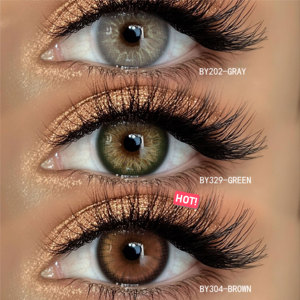
For Factory 14.0mm Diameter Colored Pupil Contact Lenses Soft Unique Opaque Color Technology for Eye Transforming Effects
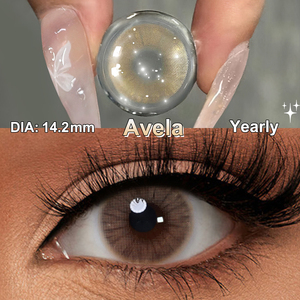
FreshGo HIDROCOR Colored Contact Lenses Wholesale Color Contact Lens Lensa Kontak Lentilles De Couleurs En Gros Les Lentilles
Executive Procurement White Paper
China & South Korea Contact Lens Supply Chain Dynamics
Understanding the convergence of Chinese high-scale cleanroom manufacturing with South Korea’s trend-setting aesthetic standards (K-Beauty) and stringent regulatory landscape.
Manufacturing Capacity & Scalability
China's contact lens infrastructure has developed automated cast-molding lines capable of churning out tens of millions of blisters monthly. By combining this immense scale with Korean-inspired dot-matrix printing technologies, optical brands attain an unmatched cost-to-performance ratio without compromising physiological eye safety.
Bio-Compatibility & Color Sandwiching
Top tier manufacturers adhere to Semi-Cast Lathe-Cut or Full Cast Sandwich Molding. This seals heavy metal and chemical colorants between inert poly-HEMA or silicone hydrogel layers, guaranteeing that organic dyes never directly contact tear films or fragile corneal epithelia.
Korea MFDS & Global Compliance
Marketing cosmetic lenses in South Korea requires navigating Class II/Class III Medical Device approvals managed by the Ministry of Food and Drug Safety (MFDS). Procurement success hinges upon upstream factories supplying verifiable ISO 13485 audit trails, full extractable studies, and CE (MDR) certificates.
| Evaluation Parameter | China Direct Large-Scale OEM | Traditional Korea Domestic Tier 1 | Eyebeauty Dual Hub Integration Advantage |
|---|---|---|---|
| Average Blister Unit Cost | Ultra-Low / High Margin Optimization | Medium to Premium High-Tier | Factory-Direct Cost with Korea-Grade Aesthetic Styling |
| Minimum Order Quantities (MOQ) | High (typically 5,000–10,000 pairs/color) | Rigid (often 3,000 pairs with setup costs) | Flexible: Low SKU pilot batches + large-scale scalable capacity |
| Regulatory Dossier Support | Variable, often requires localized re-testing | Native MFDS clearance, domestic only | Turnkey: ISO 13485, CE (MDR), and FDA FEI documentation pre-mapped for MFDS |
| Color Innovation Cycle | Fast volume replication | Original Trendsetter (Ash, Choco, Glow) | 100+ Annual New Trend Designs directly adapted to K-Beauty demand |
| Logistics Route to Korea | Cross-border ocean/air (7-12 days customs) | Inland ground transit | Streamlined Air-Freight to Incheon / Sea to Busan in under 72 hours |
Market Intelligence
Future Sourcing Trends & Next-Gen Product Shifts
Where the color contact lens market is heading over the next 3 to 5 years, highlighting actionable supply chain pivots for optical brand leaders.
1. Accelerating Shift to Daily Disposables
While yearly and 6-month lenses remain cost-effective retail engines in Latin America and Southeast Asia, the Korean, Japanese, and Western markets are decisively pivoting to Daily Disposables (1-Day). Driven by heightened consumer awareness of ocular hygiene and ocular surface wellness, brand owners are focusing their OEM budgets on automated daily blister packaging.
2. Silicone Hydrogel Cosmetic Adoption
Historically, colored contact lenses relied almost exclusively on HEMA hydrogels (38% to 42% water content). The modern consumer demands extended wearing times (12+ hours) without hypoxia-induced ocular redness. Sourcing strategies are actively incorporating high-Dk Silicone Hydrogel formulations that balance oxygen transmissibility with vibrant color encapsulation.
3. Micro-Diameter & "Half-Eye" Natural Tones
The early cosmetic era of extreme "doll-eye" 14.5mm–15.0mm enlargement circle lenses has matured. Contemporary K-Beauty design emphasizes soft, feather-blurred limbal rings, asymmetrical highlight crescents (Moonlight / Glow effect), and graphic diameters (G.DIA) between 12.8mm and 13.4mm, seamlessly enhancing natural iris structures.
Strategic Ecosystem
Integrating Chinese Scale with Korean Optical Channel Standards
Under Korean legislation, color contact lenses are categorized as Class II medical devices and are restricted from general non-prescription e-commerce direct dropshipping; they must be dispensed via licensed optical shops (안경원). Eyebeauty bridges the gap: we produce large-scale, compliant production runs out of our high-tech Chinese factories while adhering precisely to the physical tolerances, graphic subtleties, and blister labeling requirements mandated by Korean distributors and retail optical chains.
Inquire Now
Consult with our specialized Asian & Korean Sourcing Desk
Enterprise Heritage & Infrastructure
Why Global Optical Brands Choose Eyebeauty Technology
Eyebeauty Technology Co., Ltd. serves as the unified global export and solutions gateway for an industrial family group operating medical cleanrooms since 1984.
Gansu Constar Technology Group (Est. 1984)
With over four decades of dedicated vision care history, the Gansu Constar manufacturing base serves as our cornerstone for precision cast molding, soft lens polymer chemistry formulation, and international standards verification. Operating under stringent CE (MDR) and ISO 13485 quality management systems, it produces reliable, biocompatible vision wear with proven batch-to-batch repeatability.
Hunan Haipuming Technology (Liangguo Group)
Representing the state-of-the-art in modern cosmetic lens printing, the Hunan Haipuming cleanroom facilities house high-throughput automated assembly cells and high-precision color transfer robotics. Recognized by an FDA-registered facility record (FEI 3015587162), this facility specializes in intricate multi-tone patterns, micro-dot diffusion layers, and customized private-label blister packaging.
Group Proprietary Brands Tested & Scaled Globally
MILLCREEK
KSSEYE
Haipurecon
DUOXIU
Procurement Intelligence
Frequently Asked Questions for B2B Importers
Clear, definitive answers to help regulatory teams, optical chain buyers, and distributors streamline cross-border contact lens sourcing.
Can Eyebeauty support MFDS import registration and documentation in South Korea? +
Under Korean medical device laws, the domestic Korean legal entity (the importer) holds the actual device registration license issued by the Ministry of Food and Drug Safety (MFDS). Eyebeauty acts as your primary upstream manufacturing partner: we supply complete, English-translated technical documentation, including ISO 13485 quality control certificates, CE (MDR) compliance files, material characterization reports, biocompatibility testing (cytotoxicity, systemic toxicity, ocular irritation), process validation studies, and batch sterilization validation.
What is the standard Minimum Order Quantity (MOQ) for custom private label (OEM) projects? +
For ready-to-ship, in-stock catalog patterns (featuring over 1,500 active designs), wholesale orders can commence at lower quantities (e.g., 50 to 500 pairs per SKU). For full OEM private label manufacturing—including custom blister foil stamping, unique G.DIA pattern formulation, and personalized outer packaging—our standard MOQ typically begins at 1,000 to 3,000 pairs per color variation, depending on whether daily, monthly, or yearly cycle packaging is required.
What printing methodology guarantees that lens colorants will not leach? +
We employ an advanced multi-layer sandwich casting technique. Color pigments (FDA-cleared organic and mineral compounds) are embedded securely between the base curve hydrogel matrix and the outer convex optical layer. This ensures that the color printing remains physically encapsulated, eliminating any direct contact with corneal tissues or mechanical friction from eyelid blinking.
How do you manage diopter (prescription power) ratios in colored lens bulk runs? +
We accommodate customizable diopter spreads across plano (0.00) through myopic powers (-1.00 to -8.00 in 0.25D or 0.50D increments). During production planning, our team works with you to balance high-velocity prescription ratios based on your destination market's demographic vision profiles, ensuring inventory turnover remains lean and balanced.
What are the standard production lead times and shipping corridors for Asian distributors? +
In-stock wholesale inventories are dispatched within 5 to 7 business days. Custom OEM runs usually require 25 to 35 business days from final digital color proof and blister packaging confirmation. Shipments to South Korea, Japan, and Southeast Asia move via expedited express or air freight through major hubs (such as Incheon and Tokyo Narita), with delivery typically completed within 3 to 5 business days after customs departure.
Start Your Private Label Program
Scale Your Contact Lens Brand with Factory-Direct Security
Connect directly with our engineering and international regulatory support team. Request full product catalogs, prototype sample boxes, and compliance dossiers tailored to your distribution footprint.
Inquire Now
Confidential B2B Service • Quotations within 24 Hours