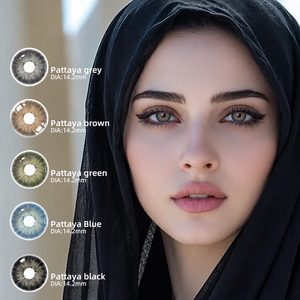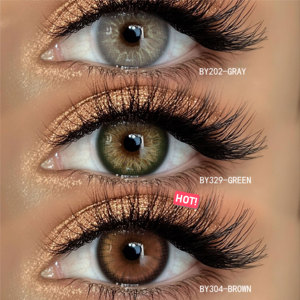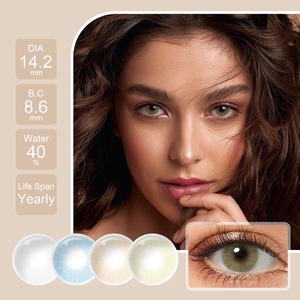
Free Sample Freshgo Top Wholesale Hidrocor Contact Lenses Soft Lentes De Contacto Cosmetic Yearly Eye Contact Lenses Lentilles
- Material: HEMA/NVP
- Water: 38%–40%
- Base Curve: 8.5–8.6mm
- Dia: 14.2mm
Explore our top-selling medical-grade cosmetic contact lenses, sterile blister solutions, custom retail boxes, and optical-grade polymer components built to international pharmacopeia standards.
Eyebeauty Technology Co., Ltd. operates as the specialized global export headquarters for our family-owned industrial group. Founded in 1984 with Gansu Constar Technology Group and broadened through Hunan Liangguo Group (Hunan Haipuming Technology), we represent one of Asia's most resilient contact lens manufacturing infrastructures.
We are not commercial brokers or third-party sourcing agents. When you partner with Eyebeauty, your contracts connect directly to our GMP cleanroom facilities across Gansu and Hunan. Direct-from-source engineering ensures bottom-line price defense, uncompromised batch repeatability, and immediate technical agility.
Operating under rigorous Class IIb / Class III medical device protocols, our production floors conform to ISO 13485:2016 quality management systems and the European Medical Device Regulation (CE MDR 2017/745). We maintain facility registration with the US FDA (FEI: 3015587162) and provide complete dossiers for Korean MFDS approval.
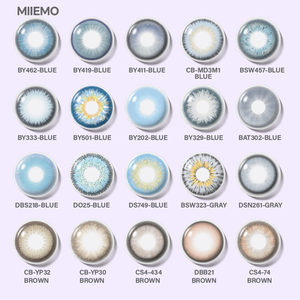
Backed by specialized brands including MILLCREEK, KSSEYE, Haipurecon, and DUOXIU, our production lines generate over 100 new trend designs annually. We engineer natural limbal rings, soft ash-greys, honey tones, and luminous highlighter styles tailored for strict consumer markets across Seoul, Tokyo, Europe, and North America.
As consumer expectations evolve from purely cosmetic use toward holistic ocular wellness, brand owners and optical retail distributors must adapt their supply chains. Here is an analytical breakdown of market shifts governing wholesale procurement through 2030.
While 2-hydroxyethyl methacrylate (HEMA) continues to dominate budget and cosmetic wholesale due to its stable hydration characteristics and pigment binding, premium private labels are pivoting rapidly toward high-oxygen silicone hydrogel formulations. Optical chains are demanding higher Dk/t values (>80 Barrer/cm) to support extended 14-hour daily wear cycles without corneal hypoxia or neovascularization.
Procurement volume is migrating from legacy annual and semi-annual cycles toward 1-Day daily disposables, particularly in high-compliance markets such as South Korea, Japan, and the European Union. Daily blister packs minimize risks of microbial keratitis and proteinaceous deposition, generating higher lifetime customer value (LTV) and steady replenishment contracts for brand owners.
Flat, opaque pigments are obsolete. Modern buyers demand sub-micron pixel printing, gradient limbal transition bands, and asymmetrical glow crescents that replicate natural iris morphology. By calibrating the optical aperture (pupil hole diameter) to 3.8mm–4.2mm, factories prevent tunnel vision during mesopic lighting while preserving transformative eye-lightening effects.
With the full implementation of EU MDR 2017/745 (Rule 16 covering non-corrective colored lenses) and Korean MFDS regulations mandating certified distribution via licensed optical stores (안경원), unauthorized cosmetic imports face customs interdiction. B2B buyers must partner exclusively with manufacturers offering verified Unique Device Identification (UDI), biocompatibility data (ISO 10993), and full batch traceability from monomer synthesis to sealed foil sterilization.
Environmental stewardship has become an active procurement metric among major pharmaceutical retailers and beauty conglomerates. Sourcing trends prioritize lightweight polypropylene (PP) blister basins with reduced plastic mass, medical aluminum foils without fluorinated barrier coatings, and Forest Stewardship Council (FSC) certified folding boxes printed with vegetable soy inks.
Understanding the manufacturing method is critical for evaluating lens geometry consistency, edge profile smoothness, and optical performance across massive wholesale runs.
| Technology Process | Pigment Safety Architecture | Surface Lubricity & Edge Profile | Production Volume & Yield | Wholesale Suitability |
|---|---|---|---|---|
| Fully Automated Cast Molding (Our Core Standard) | Triple-layer sandwich encapsulation: pigments fully enclosed within polymer matrix; zero contact with cornea. | Precision-cut curvature with rounded edge apex; minimizes conjunctival rubbing and epithelial staining. | Ultra-high capacity (millions of units/month); negligible batch-to-batch deviation (<0.02mm). | Optimal for Global Brands |
| Semi-Cast & Lathe Cutting | Base curve lathe cut, color pad printed, followed by secondary protective monomer curing coating. | Good optical power fidelity; slightly sharper edge profile requiring strict polishing inspection. | Moderate speed; higher labor requirements; tailored for custom toric/astigmatic cosmetics. | Specialty Rx & Toric |
| Legacy Spin Casting | Liquid monomer spun in mold; pigment introduced during rotational centrifugal shaping. | Variable thickness gradient; parabolic edge profiles that can induce peripheral tightness. | High speed but variable power control; declining in medical-grade cosmetic usage. | Legacy / Budget Only |
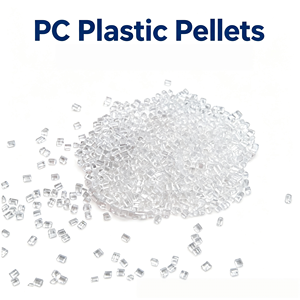
In inferior manufacturing facilities, colorants are stamped directly onto the external lens surface, exposing the delicate corneal epithelium and palpebral conjunctiva to pigment abrasion, leaching, and cytotoxic reaction. Our factories implement molecular cross-linked sandwich encapsulation: pharmaceutical-grade iron oxides, titanium dioxide, and phthalocyanine colorants are micro-injected between two sterile layers of pure poly-HEMA or silicone matrix, ensuring zero pigment migration under continuous saline friction testing.
Authoritative answers to critical commercial, regulatory, and production questions encountered by brand managers, compliance officers, and international importers.