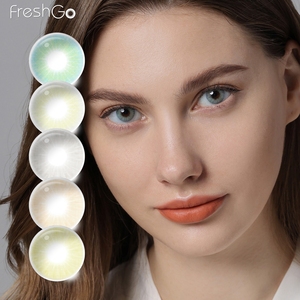
Natural Brown Hidrocor II Colored Contact Lenses Yearly Wholesale
Yearly Replacement
DIA 14.2mm
Water 40%
Engineered in Class 100,000 cleanrooms using patented sandwich color lock technology. Fully customizable for private labels, wholesale distribution networks, and licensed optical chains.
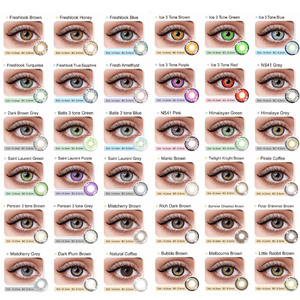
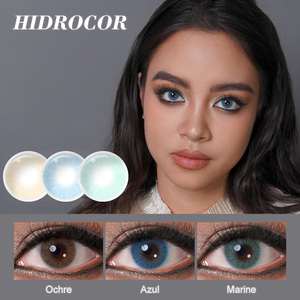
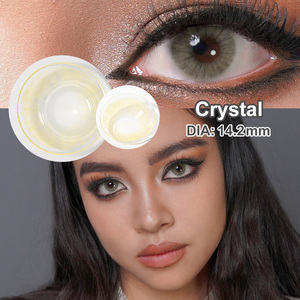
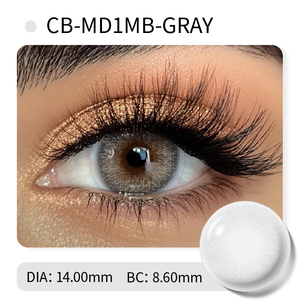
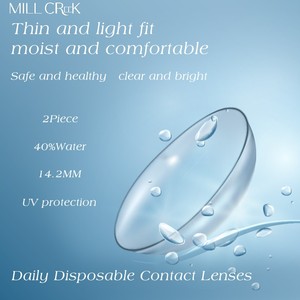
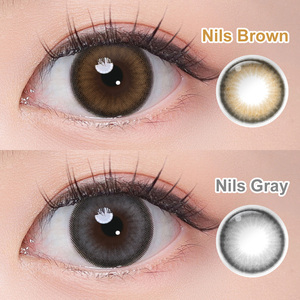
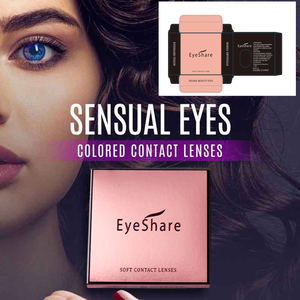
Unlike trading brokers, our production network is anchored by direct equity in premier Chinese optical plants: Gansu Constar Technology Group (Founded 1984) and Hunan Haipuming Technology (Liangguo Group).
Fully compliant with European Medical Device Regulation (EU MDR 2017/745 Class IIa). Production lines maintain ISO 13485:2016 audited cleanrooms with full traceability from monomer raw batch to patient eye.
Operating under active US FDA facility registrations. We provide extensive Device Master File (DMF) technical packages, accelerated aging evaluations, and cytotoxicity biocompatibility protocols.
Micro-pigment printing locks inorganic FDA-cleared colorants between two micro-thin hydrophilic layers. Zero pigment migration contacts the corneal epithelium, preventing optical irritation.
Specialized in Korean optical store regulations (안경원). We supply licensed importers with validated test reports for sterile barrier integrity, residual monomer rates, and physical geometry consistency.
Strategic guide for brand owners, pharmacy retail chains, and e-commerce aggregators preparing supply pipelines for next-generation ophthalmic consumer demand.
Consumer compliance and hygiene concerns are rapidly expanding 1-day color contact lens sales across Europe, North America, and Tier-1 Asian markets. Sourcing strategies are moving from long-cycle yearly vials to blister-pack daily disposables with automated cartoning. Factories with high-yield automated blister lines provide an unbeatable cost advantage for volume procurement.
While traditional Hydrogel (PolyHema, 38%-42% water) remains the industry benchmark for cosmetic print clarity, high Dk/t Silicone Hydrogel (DK > 80) formulations are entering cosmetic spheres. Wholesalers must partner with factories mastering silicone surface plasma treatments to prevent lipid deposition while maintaining vibrant dot matrix patterns.
Arbitrary re-branding without verifiable medical device manufacturing pedigrees is ending. Modern procurement demands direct factory relationships where Class IIa/IIb certificates, ETO/Steam sterilization validation, and unique device identification (UDI) barcoding are natively handled at the cleanroom packaging stage.
| Manufacturing Parameter | Full Automated Cast Molding (Our Standard) | Traditional Lathe-Cut Processing | Procurement Strategic Impact |
|---|---|---|---|
| Geometric Consistency | ±0.01 mm edge tolerance; 100% surface reproducibility | ±0.04 mm variation; operator dependent | Eliminates consumer fitting rejects; ensures smooth blink slip |
| Pigment Safety Method | Molecular micro-encapsulation (sandwich locked) | Surface pad printing or tint soak | Zero pigment exposure; conforms to medical device cytotoxicity tests |
| Daily Blister Production Capacity | Up to 350,000 units/day per automated unit cell | Limited to small artisanal batches (<5,000 units) | Supports national chain rollouts and rapid K-Beauty SKU turnover |
| Oxygen Transmissibility (Dk/t) | Optimized thin-center profile (0.06mm to 0.08mm) | Thicker center mass required (>0.10mm) | Prevents corneal hypoxia during prolonged 12-hour cosmetic wear |
Understanding the tribology, polymer chemistry, and automated optical inspection systems powering our modern production facilities.
Optical grade steel molds with sub-micron diamond turning create ultra-smooth anterior and posterior curves. The closed-loop polymerization process eliminates micro-grooves, reducing bacterial adherence.
Every single lens passes through computerized wet-cell Artificial Optical Inspection (AOI) cameras detecting edge tears, bubbles, center misalignment, and dot-matrix color voids in milliseconds.
Built-in reactive UV absorbing monomer additives block over 70% of UVA and 95% of harmful UVB rays, shielding both internal ocular tissues and delicate retinal receptors from phototoxic degradation.
Packaged in buffered isotonic physiological saline enriched with hyaluronic acid (HA) or trehalose lubricating agents to guarantee immediate initial comfort upon first blister opening.
Direct answers for international B2B buyers, supply managers, and regulatory directors.
Whether you are developing a new K-Beauty aesthetic cosmetic brand, expanding an optical franchise inventory, or upgrading your regulatory documentation partner, our engineering and commercial teams are on standby.