Holiday Series
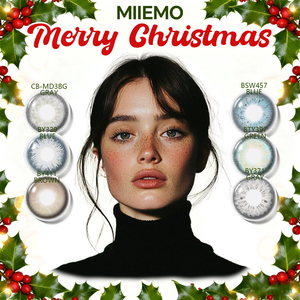
Factory-direct portfolios curated for international optical retailers, dermatology clinics, and cosmetic retail conglomerates requiring high biocompatibility and market-validated color depths.
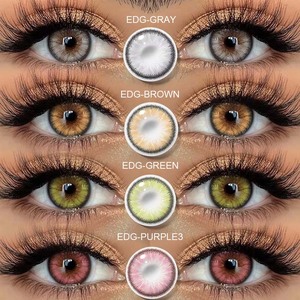
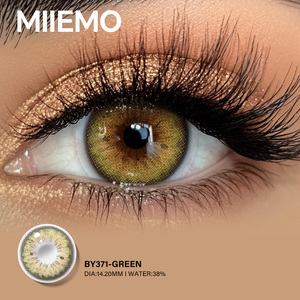
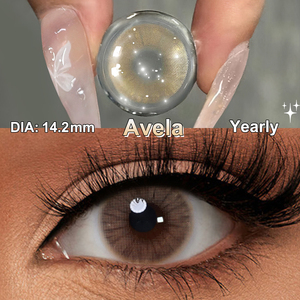
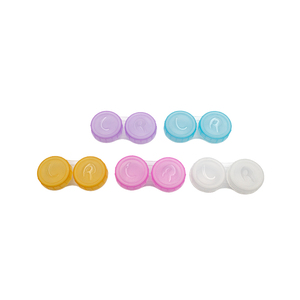
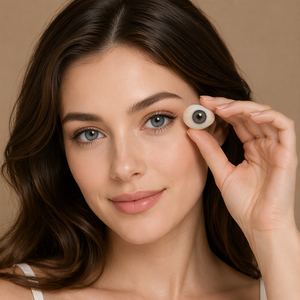
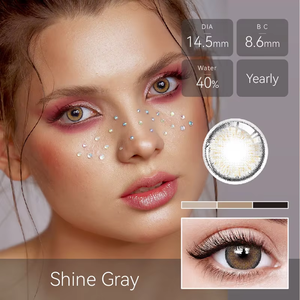
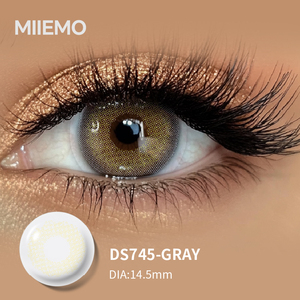
The global color contact lens market has evolved decisively from niche novelty wear to an integral segment of the mainstream beauty regimen and clinical vision care routine. For professional procurement directors, brand owners, and optical retail syndicates, choosing the proper manufacturing foundation is the singular determinant of supply chain resilience, safety compliance, and commercial velocity. China stands at the epicenter of this paradigm, boasting an ultra-sophisticated medical device ecosystem that seamlessly synthesizes heavy polymer synthesis, optical precision cast-molding, and high-aesthetic pigment printing.
Sourcing color contact lenses wholesale from premier Chinese manufacturers offers decisive operational benefits over fragmented secondary markets. Facilities engineered around Class 100,000 cleanrooms provide unmatched production scalability, reducing per-unit manufacturing costs while enforcing absolute lot-by-lot consistency. Unlike generic intermediaries, authentic Chinese primary manufacturers control the full technical pipeline: from monomer blending (such as high-Dk silicone hydrogel and purified HEMA polymers) to automated cast molding, double-sandwich color encapsulation, automated optical inspection (AOI), and terminal moist-heat autoclave sterilization. This level of vertical integration guarantees that high visual appeal never compromises ocular surface health.
Procurement teams navigating the cosmetic contact lens category must align their purchasing strategies with emerging consumer biometrics, material sciences, and environmental frameworks. In the coming half-decade, three major technological shifts are dictating factory evaluation matrices and global inventory portfolios:
Traditional cosmetic lenses relied heavily on conventional 2-HEMA polymers with standard oxygen transmissibility (Dk/t: 15–25). Future purchasing is pivoting sharply toward high-Dk silicone hydrogel matrices (Dk/t: >80). Maintaining hydration stability while locking pigments inside a fluorosilicone network demands specialized molecular encapsulation technology that top-tier Chinese cleanrooms have mastered to combat dry-eye syndrome during prolonged wear.
The cosmetic market has outgrown flat, unnatural, opaque color plates. Today's commercial drivers are ultra-fine multi-tone gradations, asymmetric highlight patterns, and 3D light-refracting limbal blends. Chinese design centers now deploy high-resolution computer-to-plate (CTP) pad printing systems and micron-level ink deposition, allowing brands to launch hyper-realistic eye-color variations that seamlessly match deep Asian, warm Caucasian, and high-melanin irises.
Global regulatory pressure and evolving ESG criteria are driving rapid growth in 1-Day daily disposable colored lenses. B2B contracts are prioritizing automated packaging lines capable of reducing polypropylene blister plastic, utilizing solvent-free printing inks, and deploying biodegradable outer carton configurations without degrading the sterile seal integrity required by international Pharmacopoeia standards.
When selecting a core supply partner for medical-grade color contact lenses, institutional credibility and traceable operational control are non-negotiable. Eyebeauty Technology Co., Ltd. serves as the direct international gateway and dedicated service headquarters of an elite family-owned optical manufacturing consortium founded over four decades ago in 1984.
We are not a secondary trading company, sourcing agent, or commission-based middleman. We represent the direct production capability of our owned world-class cleanrooms: Gansu Constar Technology Group (our founding industrial manufacturing base, operating continuously for 42+ years) and Hunan Haipuming Technology (Liangguo Group), our specialized soft lens and beauty contact manufacturing powerhouse. This vertically integrated parent structure delivers immense competitive advantages to enterprise clients worldwide:
Our production facilities maintain comprehensive regulatory qualifications. We operate under stringent ISO 13485 quality management systems, maintain CE (MDR) medical device certifications for European distribution, and are an FDA-registered facility (FEI: 3015587162). Every production run is backed by validated sterilization batch records, biocompatibility dossiers, and chemical leakage-free safety profiles.
Eye safety is our foundational engineering benchmark. Eyebeauty utilizes a proprietary embedded color isolation matrix. In this true "sandwich" cast-molding architecture, organic pigments are hermetically trapped between two ultra-smooth micro-layers of optical hydrogel material. At no point do colored pigments contact the delicate corneal tissue or palpebral conjunctiva, eliminating surface abrasions and dye leaching.
Backing major retail brands such as MILLCREEK, KSSEYE, Haipurecon, and DUOXIU, we provide turn-key private-label solutions. We support global partners with custom blister foil sealing, sterile glass vials, multi-pack retail boxes, Pantone-matched lens hues, tailored base curves (8.5mm to 8.7mm), custom diameters (14.0mm to 14.5mm), and comprehensive regulatory documentation support (including Korean MFDS, US FDA, and EU MDR filings).
Direct technical and operational guidance addressing regulatory validation, production parameters, and commercial contracts for international buyers.
Connect directly with our senior optical formulation engineers and international account managers. Get direct factory pricing, request free production samples, or configure your next private label collection today.
Get a Quote