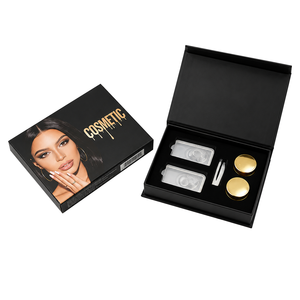
Factory-Direct Catalog
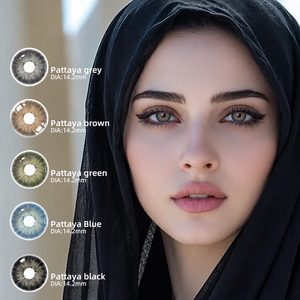
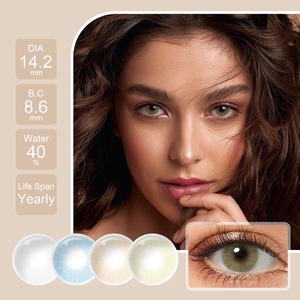
Featured OEM/ODM Cosmetic Contact Lenses & Packaging Solutions
Engineered in Class 100,000 cleanrooms with advanced sandwich printing technology to ensure absolute ocular safety, high oxygen transmissibility, and exquisite micro-pigmentation aesthetics.
42+
Years Manufacturing (Since 1984)
15,000+
Proprietary Lens Designs
126+
Global Export Markets
10,000+
B2B Optical Brands Served
Executive Industry White Paper
Navigating the Global Cosmetic Contact Lens Supply Chain
A complete strategic overview of clinical medical device standards, multi-tone color encapsulation, and regulatory documentation architectures for enterprise distributors and private label brand owners.
The convergence of clinical ophthalmology and cosmetic fashion has transformed the global color contact lens landscape into one of the highest-margin, fastest-growing verticals in personal health products. Once viewed strictly as refractive medical devices, contact lenses have achieved runaway momentum as everyday beauty staples through the pervasive influence of K-Beauty, Douyin makeup trends, and Western hyper-pigmented cosmetic looks. However, unlike traditional fast-moving consumer goods (FMCG), cosmetic contact lenses remain classified globally as Class II or Class III medical devices. This regulatory designation requires rigorous cleanroom protocols, validated biocompatibility testing, non-cytotoxic formulation stability, and complete batch traceability from raw polymer synthesis to terminal sterilization.
For international buyers, optical retail conglomerates, and boutique e-commerce labels, sourcing contact lenses directly from China is no longer merely a cost-reduction exercise. It represents a strategic operational alliance. As global standards transition from MDD to the stringent European Medical Device Regulation (EU MDR 2017/745), brand owners face unprecedented regulatory barriers to entry. Sourcing from unverified trading companies introduces catastrophic risks, including border seizures, product recalls, corneal abrasion liabilities, and permanent reputational damage. At Eyebeauty Technology Co., Ltd.—acting as the unified international service and export arm of Gansu Constar Technology Group and Hunan Haipuming Technology (Liangguo Group)—we operate our own fully accredited cGMP facilities. Our production combines four decades of optic craftsmanship with computerized automation, ensuring every hydrogel and silicone-hydrogel lens fulfills uncompromising clinical standards.
Institutional Authority
Why Global Optical Importers Partner with Eyebeauty
Direct factory ownership eliminates intermediary friction, guarantees transparent batch records, and ensures unmatched supply agility.
CE (MDR) & ISO 13485 Verified
Fully audited medical device quality management systems complying with EN ISO 13485:2016, EU MDR 2017/745, and FDA facility registration (FEI: 3015587162). Complete validation dossiers ready for instant filing.
Sandwich Color Locking
Patented micro-encapsulation embeds cosmetic pigments securely within the internal HEMA matrix. Pigment never contacts ocular tissue, completely eliminating dye leakage, corneal staining, and micro-abrasion.
1,500+ Ready-to-Ship SKUs
Massive warehouse buffering enables rapid 7- to 10-day order fulfillment on trending natural, glow, and contour designs across Daily, Monthly, and Yearly replacement modalities for nimble market validation.
Global Regulatory Support
Expert in-house regulatory affairs (RA) team provides custom technical documentation, accelerated stability data, biocompatibility portfolios, and labeling dossiers for Korea MFDS, US FDA, and ASEAN registrations.
Strategic Procurement Forecasting
Future Procurement Trends in the Cosmetic Lens Sector
Critical insights for category managers, optical chains, and direct-to-consumer brand leaders planning their 2026–2030 inventory roadmap.
Rapid Shortening of Replacement Cycles
Procurement volume is pivoting decisively away from traditional annual vials toward daily disposable (1-Day) and monthly blister packs. Driven by heightened consumer hygiene awareness and convenience, the 1-Day segment delivers higher repeat-purchase lifetime customer value (LTV) and significantly reduces compliance-related microbial keratitis risks.
Low-MOQ Agile Sourcing & SKU Testing
Modern e-commerce beauty brands demand lean inventories to mitigate unsold stock write-offs. Leading enterprise suppliers must provide hyper-flexible MOQ thresholds (down to 500 pairs per power step) combined with customized multi-box packaging. This allows brands to test hyper-niche micro-trends—such as anime cosplay iris patterns or muted ash-hazel gradients—before committing to large-scale master carton production runs.
End-to-End Packaging Localization
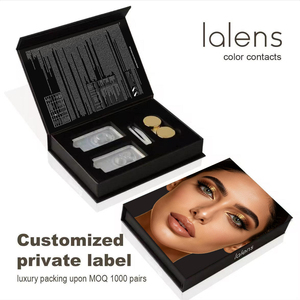
B2B procurement has moved beyond bare blister packs. Turnkey programs now require fully finished retail-ready presentation: custom-engineered rigid gift sets, anti-counterfeiting holographic tear-strips, multilingual compliant leaflets (Korean, Arabic, French, German), and high-density EVA insert trays. These elements are designed to elevate unboxing experiences and capture premium retail shelf space.
Material Science & R&D
Technological Frontiers in Cosmetic Contact Lens Manufacturing
How next-generation polymer chemistry, cast-molding precision, and optical filtering are redefining wearer comfort and visual fidelity.
Silicone-Hydrogel (SiHy) Pigment Encapsulation
While standard HEMA hydrogel provides reliable hydration, the sector's technical pinnacle is Silicone-Hydrogel cosmetic lenses. Boasting exceptional oxygen transmissibility (Dk/t exceeding 100 barrers), these materials resolve end-of-day eye fatigue and corneal hypoxia, allowing cosmetic lens wearers to maintain all-day ocular clarity and corneal health.
HEV Blue Light & UV400 Ocular Defense
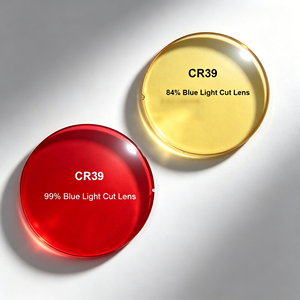
Reflecting the massive increase in daily digital device screen time, cosmetic contact lenses are now engineered with active chromophore additives. By filtering up to 90% of harmful High-Energy Visible (HEV) blue light and providing Class II UV protection, modern cosmetic lenses combine cosmetic pupil enlargement with clinical photo-protection.
Biomimetic Wetting Agents (MPC & Hyaluronic Acid)
Surface lubricity is critical for wearer retention. Cutting-edge manufacturing incorporates 2-methacryloyloxyethyl phosphorylcholine (MPC) and locked-in Sodium Hyaluronate into the storage saline solution. This forms a continuous, ultra-slick biomimetic hydration cushion that resists lipid and protein deposition, significantly boosting comfort in arid or air-conditioned environments.
Procurement Advisory
Frequently Asked Questions for Enterprise B2B Buyers
Clear, authoritative guidance on minimum order quantities, private label compliance, custom dot-matrix design, and global customs clearance.
What regulatory documentation is required to legally import contact lenses from China?
Because contact lenses are regulated as medical devices, importers must generally hold local regulatory clearances. Eyebeauty equips your regulatory team with a comprehensive manufacturer dossier: accredited ISO 13485:2016 certification, valid CE (MDR) certificates, biocompatibility test records (ISO 10993-series covering cytotoxicity, ocular irritation, and systemic toxicity), steam sterilization validation reports, product formulation datasheets, and batch Certificates of Analysis (COA). For South Korea, we provide the complete documentation suite required by the Ministry of Food and Drug Safety (MFDS).
What is the standard Minimum Order Quantity (MOQ) for custom private label OEM/ODM?
Our MOQ structure is designed to support brand incubation alongside mass distribution. For in-stock ready-to-ship designs with standard blister packaging, MOQs start as low as 50–100 pairs per SKU for wholesale sampling. For full private-label manufacturing—including custom-printed foil lids, specialized graphic diameters, and branded outer cartons—our MOQ typically begins at 500 to 1,000 pairs per color across standard power ranges (-0.00 to -8.00D). For fully bespoke pad-printing mold development, commercial minimums are established during the initial technical scoping call.
How does the Sandwich Printing Method safeguard ocular health?
In sub-standard manufacturing, pigments are printed directly onto the lens surface, exposing corneal and conjunctival tissue to physical friction, chemical leaching, and micro-erosion. Our sandwich technology encapsulates pharmaceutical-grade organic micro-pigments between two layers of polymer matrix. The colored pattern remains entirely sealed inside the lens core. This ensures that the smooth outer surfaces of the lens remain non-abrasive, optically pure, and completely harmless to the delicate corneal epithelium.
Can we develop customized color designs and tailored graphic diameters (GDIA)?
Yes. Our in-house design studio creates more than 100 new trend-aligned models annually. Clients can supply their own vector art, digital iris color swatches, or physical reference samples. We calibrate micro-dot matrices, gradient transition rings, pupil clearance diameters, and total graphic diameters (ranging from natural 13.0 mm up to striking 14.5 mm enlargement profiles) using high-precision cast-molding tooling to ensure flawless optical reproducibility across millions of units.
What is the typical production and delivery lead time for export shipments?
For catalog SKUs in stock, orders are checked, packed, and dispatched via express air freight (DHL, FedEx, UPS, or dedicated air cargo) within 7 to 10 business days. For customized OEM production runs involving custom blister foils, secondary retail boxes, and power-stepped prescription assortments, baseline production timelines range between 30 and 45 calendar days, including rigorous post-sterilization quarantine and batch microbiological incubation testing.
Partner with Eyebeauty
Scale Your Color Contact Lens Brand with Factory-Direct Security
Connect with our dedicated international engineering and regulatory team. Request sample master kits, explore virtual try-on assets, or review technical compliance files for your target markets today.