Featured Medical & Cosmetic Contact Lens Lines
Full-mold cast hydrogel and biocompatible color lenses produced in ISO 13485 cleanroom facilities under CE MDR regulatory certification. Ready for international brand registration and private-label scaling.
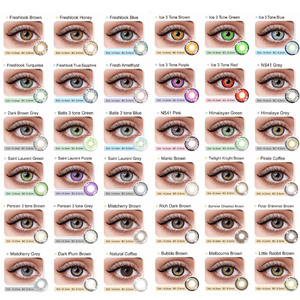
Material: Hydrogel (38%-42% Water)
Ultra-thin edge contouring, high oxygen transmissibility for comfortable daily wear.
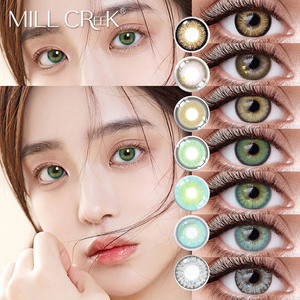
Technology: Multi-layer Pigment Encapsulation
Color lock sandwich process guaranteeing zero dye contact with corneal epithelium.
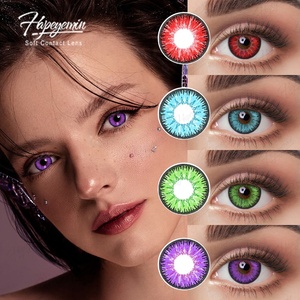
Customization: Private packaging, barcode, base curve
Engineered for global brand owners, optical distribution chains, and clinics.
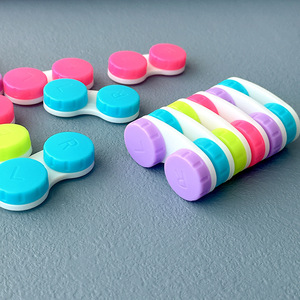
Application: Lens hygienic storage & insertion
Leak-proof seal, ergonomic handling accessories, customizable Pantone colors.
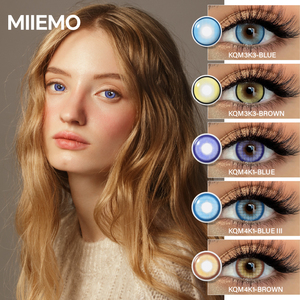
Optics: High-definition aspheric front surface
Natural iris gradience with subtle limbal ring blending; low MOQ for launch tests.
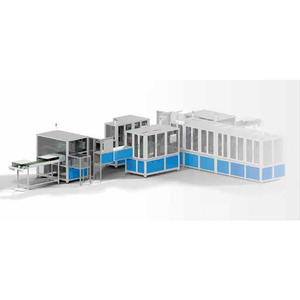
Precision: Micro-defect detection down to 5 microns
Industrial-grade manufacturing infrastructure backing high-volume batch yields.
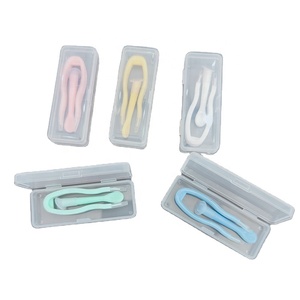
Accessory: Silicone-tipped applicator & hygienic tweezers
Optimized for retail bundling with private-label lens collections.
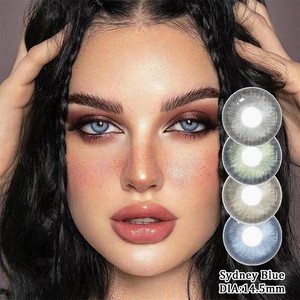
Process: Fully cast molded, UV-blocking monomer
Enhanced enlargement profile with all-day moisture retention matrices.
Certified Factory Heritage: Gansu Constar & Hunan Liangguo Group
Unlike trading brokers, Eyebeauty serves as the dedicated international operational headquarters for our family-owned industrial manufacturing facilities, controlling every aspect from monomer chemistry to sterilized blister packaging.
Stringent Regulatory & Quality Architecture
Since the establishment of our primary production line in 1984 under Gansu Constar Technology Group, our industrial facilities have prioritized medical regulatory compliance. Today, our production sites maintain:
- CE Marking under Medical Device Regulation (MDR 2017/745): Rigorous clinical evaluation, technical documentation, and audited quality management protocols for Class IIa/IIb ophthalmic devices.
- ISO 13485:2016 Certification: Complete end-to-end trace control encompassing raw material synthesis, precision tooling, cleanroom casting, and sterilization.
- FDA-Registered Facility (FEI 3015587162): Documented compliance adhering to United States FDA cGMP criteria for overseas contact lens manufacturers.
- Class 100,000 & Class 10,000 Cleanrooms: Environmental air particulate monitoring, automated water-for-injection (WFI) distillation lines, and continuous bioburden testing.
Advanced Optical Engineering & Haipuming Tech
Our expansive production base at Hunan Haipuming Technology (Liangguo Group) specializes in high-volume, automated cosmetic and corrective soft contact lens fabrication. Key proprietary capabilities include:
- Full-Mold Cast Technology: High-precision nano-machined optical molds ensuring surface roughness below 10 nanometers, ensuring superior wettability and tear exchange dynamics.
- Color-Lock "Sandwich" Embedment: Biocompatible pigments are fully encapsulated within hydrophilic polymer matrices, preventing color leaching and protecting the corneal surface from abrasive contact.
- Pantone-Calibrated Trend Design: Over 15,000 proprietary visual patterns, including natural iris textures, 3-tone glow transitions, subtle limbal rings, and custom graphic diameters ranging from 11.8mm to 14.5mm.
- Automated Optical Inspection (AOI): 100% in-line vision inspection scanning for edge tears, foreign particulates, bubble inclusions, and power aberrations.
Engineering & Procurement Playbook: Evaluating Contact Lens Factories
Sourcing contact lenses on an OEM/ODM basis requires navigating complex medical device regulations, rigorous material engineering, and logistical realities. For optical retail chains, ophthalmic distributors, and digital-native cosmetic brands, vendor audits must extend far beyond price-per-pair metrics.
1. Raw Material Homogeneity & Dk/t Values
The clinical baseline of any soft contact lens depends on its monomeric composition. Traditional PHEMA (poly-2-hydroxyethyl methacrylate) hydrogels provide predictable hydration (38%-42%) but lower oxygen transmissibility (Dk/t around 12-25). For prolonged wear and premium positioning, evaluate the factory's silicone-hydrogel polymerization capability, achieving Dk/t ratings above 80 to eliminate hypoxic corneal complications.
2. Edge Profile Engineering
Comfort upon insertion is governed by the peripheral edge design. High-precision cast molding produces tapered, chisel-shaped or rounded edges that minimize eyelid interaction during blinking. Avoid suppliers utilizing legacy lathe-cutting for soft lenses without multi-stage polishing, as irregular edge radii dramatically increase foreign-body sensation and conjunctival staining.
3. Sterilization Cycle Validation
Sterility Assurance Levels (SAL 10⁻⁶) must be verified through validated terminal moist heat (steam autoclave) cycles conforming to ISO 17665. Sourcing managers must demand complete F0 cycle lethality documentation, bioburden validation prior to capping, and accelerated aging stability reports substantiating 3- to 5-year packaging shelf-life claims.
Future Procurement & Technological Trends (2026–2030)
As consumer habits, environmental standards, and ophthalmic science evolve, B2B procurement strategies are shifting toward agile manufacturing, advanced ocular biopolymers, and stringent regulatory harmonization.
Shift to Daily Disposable Modalities
Global consumer preference is rapidly consolidating around 1-Day daily disposable modalities. Eliminating lens cases and chemical disinfecting solutions reduces the incidence of contact lens-induced acute red eye (CLARE) and microbial keratitis. Buyers are reallocating supply agreements from monthly and annual vials into automated high-speed daily blister packaging lines.
Biomimetic Monomers & Wetting Agents
To address screen-induced dry eye syndrome among digital device users, lens polymers are being integrated with internal wetting agents such as Hyaluronic Acid (HA), Polyvinylpyrrolidone (PVP), and 2-Methacryloyloxyethyl Phosphorylcholine (MPC). These biomimetic hydrogels resist lipid and protein deposition while maintaining tear film stability over 14+ hours of continuous wear.
Agile Private-Label Customization
Brands increasingly require flexible batch runs rather than rigid 50,000-unit factory minimums. Advanced manufacturing lines allow rapid changeover of blister foil graphics, multi-lingual outer boxes (e.g., FDA, CE, MFDS compliance), and regional diopter distributions (plano cosmetic up to -10.00D corrective powers), enabling brands to test localized market trends with reduced capital exposure.
Regulatory Dossier Digitization & UDI
Global medical device agencies enforce Unique Device Identification (UDI) tracking and complete supply chain transparency. Factories must supply fully validated Technical Documentation Files (TDF), Biocompatibility testing data (ISO 10993 series), Cytotoxicity, Ocular Irritation, and Systemic Toxicity reports for immediate submission to regulatory authorities worldwide.
Optical Innovation: Myopia & Aspherics
Soft contact lens manufacturing is branching into specialized clinical niches. Aspheric aberration control designs enhance low-light contrast sensitivity, while dual-focus peripheral defocus soft lenses are gaining prominence in pediatric and youth myopia progression management, opening substantial high-margin segments for OEM brand portfolios.
Sustainable & Reduced-Plastic Packaging
Environmental accountability is reshaping primary and secondary packaging. Production lines are adopting ultra-compact blister cups that reduce virgin polypropylene plastic usage by up to 30%, coupled with soy-ink recycled carton packaging and saline solutions free from persistent synthetic additives.
Frequently Asked Sourcing & Compliance Questions
Key technical answers to facilitate smooth factory audits, regulatory validation, and private-label brand scaling.
What specific technical files do your factories provide to support local regulatory registration?
How does your color contact lens production ensure zero pigment exposure to the cornea?
What are the standard Minimum Order Quantities (MOQs) for OEM private label projects?
Can you manufacture both cosmetic plano and high-power prescription contact lenses?
What are the lead times from design confirmation to final factory dispatch?
Partner Directly with a World-Class Lens Factory
Discuss your product specifications, private label packaging requirements, or regulatory dossier needs directly with our engineering and international business team. No intermediaries — complete factory accountability.
Contact Us